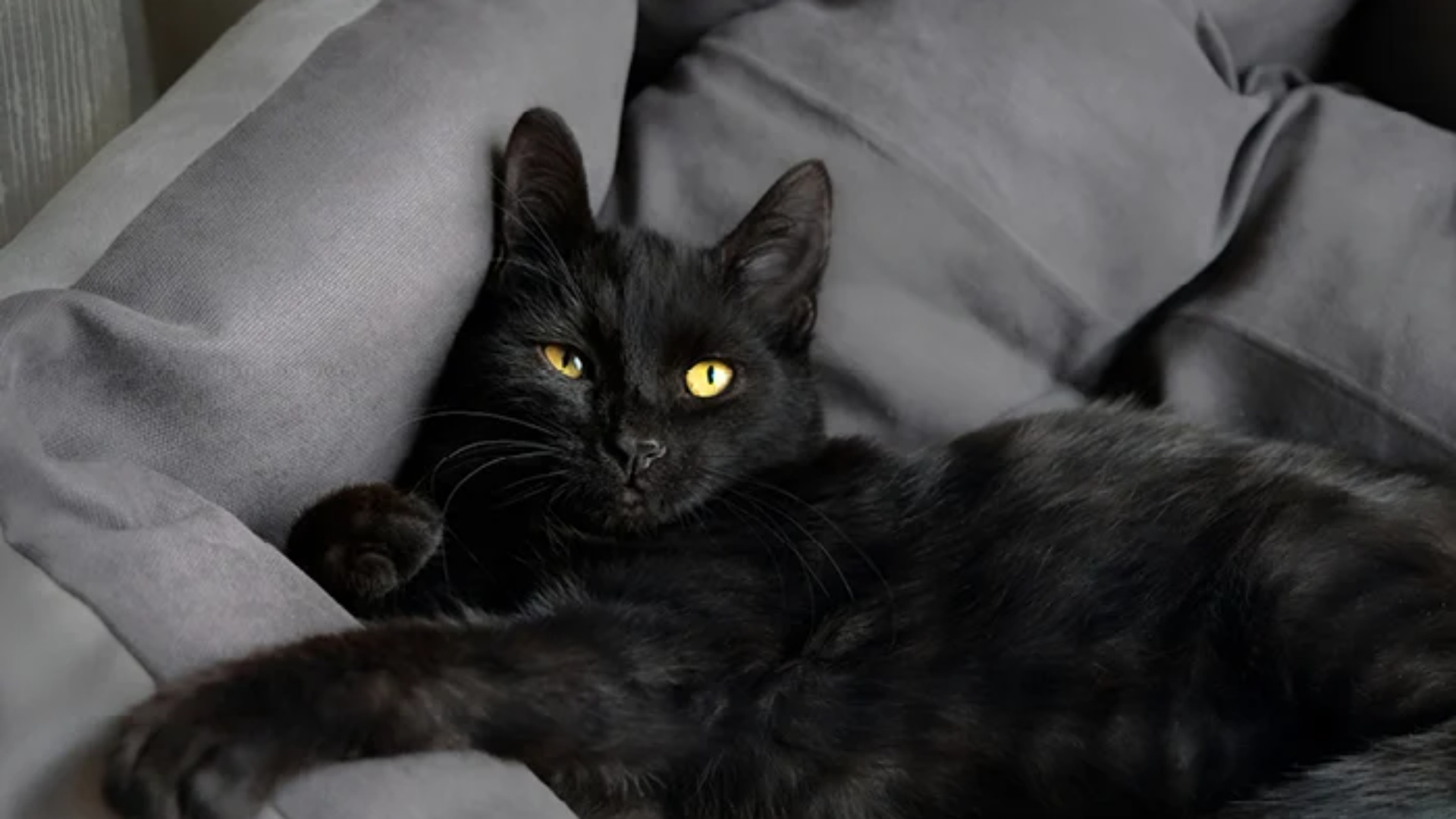
Many people still believe that a black cat crossing your path brings bad luck. Others associate them with witchcraft, witches, or misfortune. But how many of these beliefs are true? Black cats are among the most misunderstood animals in the world. Their history is filled with myths, fears, and prejudices that have survived for centuries, creating an image that does not match reality. Essentially, they are no different from other cats except for their fur color and are just as affectionate, intelligent, and playful.
In fact, perceptions of black cats vary from one country to another. In some cultures, they are linked to bad luck, while in others they are considered symbols of good fortune, love, and prosperity. It is precisely this stark contrast between myths and reality that makes them even more interesting. These prejudices have not only influenced how we view them but also their fate, as they are often adopted less frequently than other cats. However, more and more people are realizing that these beliefs have no real basis.
Here are 13 facts that show why these cats deserve a completely different reputation:
During the Middle Ages, black cats were associated with Satan and witches. Many people believed they were accomplices of witches or even witches transformed. These beliefs led to persecution and mass killings of cats, as well as the people who kept them.
Even in modern times, some shelters avoid adopting out black cats during October, fearing they might be used in rituals or mistreated.
In Japan, it is believed that single women who own black cats attract more admirers. In some parts of Britain, a black cat is considered an ideal gift for brides, symbolizing luck and happiness.
Sailors kept cats on ships to control rodents. A black cat was considered particularly lucky, as it was believed to guarantee a safe journey and return home.
According to studies by the National Institutes of Health, genetic mutations linked to black fur may offer some protection against certain diseases. This makes cats an interesting model for studying human health as well.
Prolonged exposure to UV rays can break down the black pigment in their fur, giving it a brown or rusty hue. However, this is temporary and disappears as new fur grows.
In Scotland, it is believed that a black cat appearing on the doorstep heralds the arrival of wealth. In France and Germany, there are also positive beliefs about them.
Black cats are not a separate breed. The black color can appear in many different breeds, from short-haired to long-haired.
Black is one of the most dominant colors in cats, although many may also have small white spots.
Most black cats have bright eyes, which create a striking and attractive contrast with their fur.
Although they appear completely black, some have hidden "tabby" patterns that can only be seen in bright light.
The phenomenon known as "black cat bias" causes them to be adopted less frequently and to stay longer in shelters.
Fur color does not affect personality. Some black cats are very affectionate and close, while others are more independent, just like any other cat.