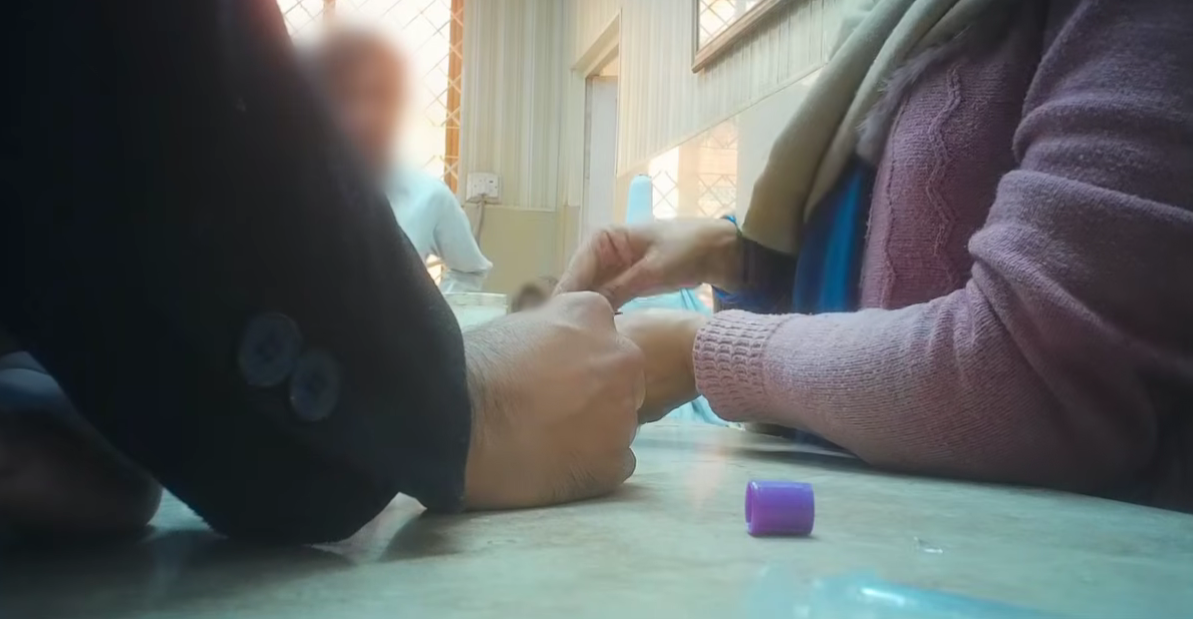
We may be in the 21st century, but practices reminiscent of earlier times appear to persist in hospitals across Pakistan.
A BBC undercover investigation has uncovered serious irregularities at a government hospital at the epicenter of an HIV outbreak that has affected more than 300 children.
Evidence suggests the reuse of syringes and systematic breaches of safety protocols played a key role in the spread of the virus within the hospital. At the same time, footage has emerged of patients receiving injections through their clothing.
The investigation reveals that at least 331 children tested positive for HIV in Taunsa city, Punjab province, between November 2024 and October 2025. Many of the children are said to have been infected during routine medical procedures at the public THQ Taunsa hospital in Pakistan.
According to official data, in more than half of the cases, the likely cause of HIV transmission was the use of contaminated needles, while mother-to-child transmission was recorded in a minority of cases.
Although authorities announced preventive measures in 2025, the investigation, with over 32 hours of covert recording, shows medical staff continued to reuse syringes and handle equipment improperly.
In at least 10 instances, syringes were reused on multi-dose vials, while in four cases, medication from the same container was administered to several children. Furthermore, dozens of incidents were recorded where injections were given without sterile gloves, as well as the handling of medical waste without protection.
Experts warn that the risk of transmission remains even if the needle is changed, as long as the syringe barrel is contaminated. The hospital administration denies the veracity of the findings or claims they are from a previous period. Meanwhile, local authorities state there is no clear epidemiological evidence directly linking the hospital to the epidemic.
However, an inspection report in April 2025 by an international mission identified the same issues: unsafe injections, poor hand hygiene, reuse of equipment, and unsuitable conditions in pediatric wards.
Experts say the problem is not confined to a single hospital. Pakistan has one of the highest rates of injection use in the world, many of which are considered unnecessary.
Pressure from patients, combined with shortages of medical resources and supplies, often leads to dangerous practices such as the reuse of equipment.
The Taunsa case is not isolated. In 2019, a similar outbreak in Rato Dero city infected hundreds of children, with cases projected to reach around 1,500 by 2021. Similar incidents have also been recorded in Karachi, where syringe reuse was confirmed as the cause of transmission.
Despite assurances from authorities, the findings indicate that dangerous practices continue. The case raises critical questions about the safety of the healthcare system and the accountability of the responsible authorities, with children being the most vulnerable victims.