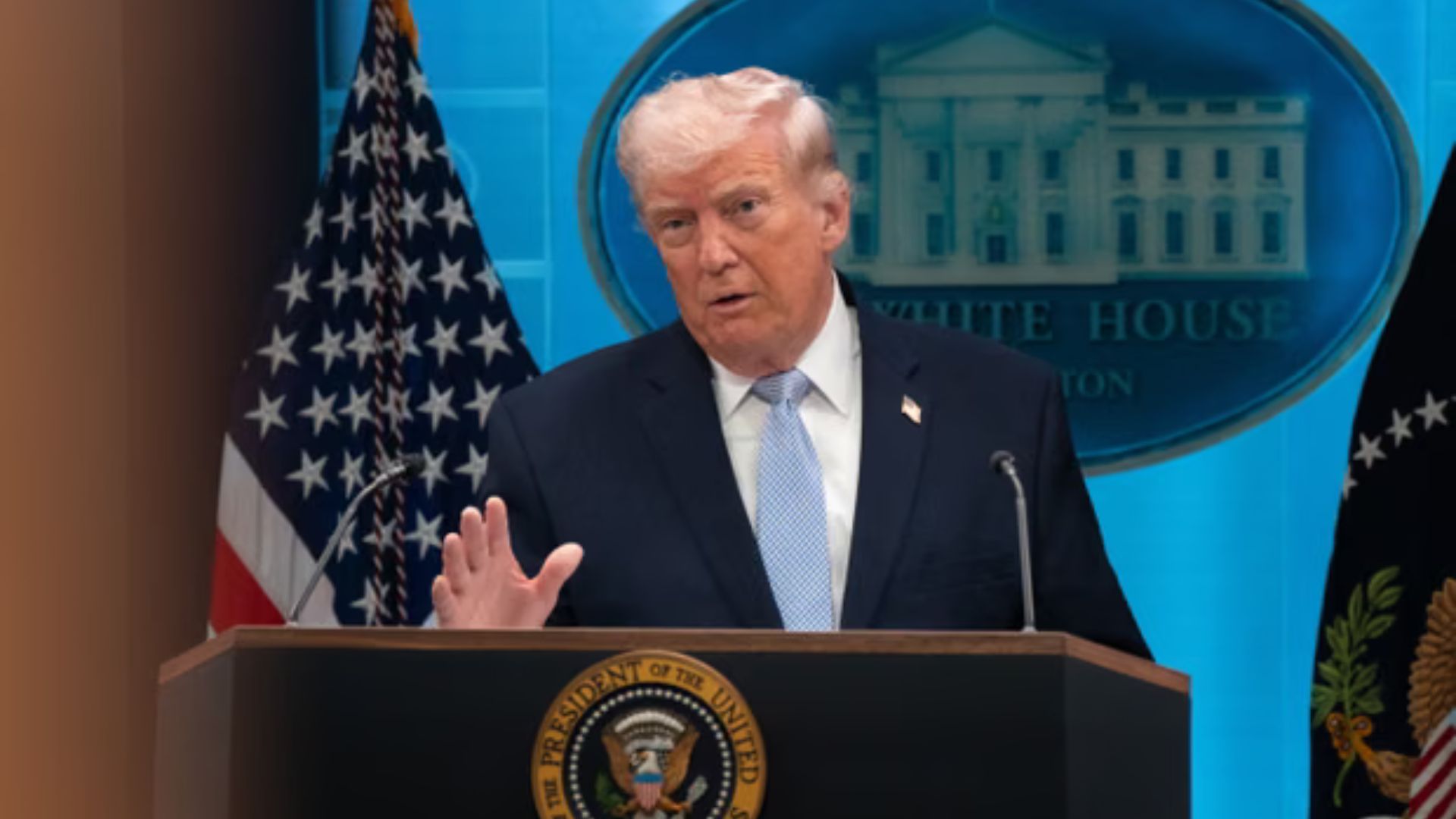
The United States and Iran agreed to a two-week ceasefire late yesterday, which included a temporary reopening of the Strait of Hormuz, following a last-minute diplomatic intervention led by Pakistan, canceling an ultimatum from Donald Trump for Iran to surrender or face widespread destruction.
Trump's announcement of the ceasefire agreement came less than two hours before the American president's deadline to bomb Iran's power plants and bridges, an action that legal scholars and officials from many countries had warned could constitute war crimes.
Just hours earlier, Trump had written on Truth Social: "An entire civilization will die tonight, never to return. I don't want this to happen, but perhaps it will." American B-52 bombers were reported to be heading toward Iran before the ceasefire agreement was announced.
Trump announced that a ceasefire agreement had been mediated through Pakistan, whose Prime Minister, Shehbaz Sharif, had requested a two-week peace period to "allow diplomacy to continue its course."
Trump wrote in a post that "depending on the Islamic Republic of Iran's acceptance of the FULL, IMMEDIATE, and SECURE OPENING of the Strait of Hormuz, I agree to suspend bombings and attacks on Iran for a period of two weeks."
In a later post, the American president called Tuesday "a great day for world peace." He said the U.S. would "assist with traffic regulation" in the Strait of Hormuz and that "significant money will be made" as Iran begins reconstruction.
The Prime Minister of Pakistan had earlier stated that the agreed ceasefire covered all fronts, including Lebanon.
The ceasefire process was shrouded in uncertainty after Iran published two different versions of the 10-point plan intended to serve as the basis for negotiations, which Trump called a "workable foundation on which to negotiate."
Pakistan has invited the U.S. and Iran to talks in Islamabad on Friday. Tehran said it would participate, but Washington has not yet publicly accepted the invitation.
In the two-week ceasefire, Trump said he believed the U.S. and Iran could negotiate over the 10-point proposal, which would allow a ceasefire to be "finalized and consummated."
"This will be a MUTUAL CEASEFIRE!" he continued. "The reason for doing this is that we have already met and exceeded all military objectives, and we are far from a Final Agreement regarding LONG-TERM PEACE with Iran and PEACE in the Middle East."
Iran's Foreign Minister, Abbas Araghchi, issued a statement immediately after Trump's announcement, saying Iran had agreed to the ceasefire. "For a two-week period, safe passage through the Strait of Hormuz will be possible through coordination with Iran's Armed Forces," he wrote.
Oil prices fell, stocks rose, and the dollar dropped on Wednesday as a two-week ceasefire in the Middle East sparked a wave of relief, fueled by hopes that oil and gas flows through the Strait of Hormuz could resume.
Despite the temporary ceasefire, attacks continued across the region in the hours following Trump's announcement. Before the deadline, airstrikes hit two bridges and a train station in Iran, and the U.S. struck military infrastructure on Kharg Island, a key center for Iranian oil production.
This sudden shift in stance will allow Trump to withdraw, as the U.S. war in Iran has dragged on for five weeks with little sign that Tehran is ready to surrender or relinquish control over the strait, a channel for one-fifth of the global energy supply, where traffic has slowed to some extent.
Trump had previously dismissed the 10-point plan as "not good enough," but the president has set deadlines before and allowed them to pass during the five weeks of conflict. However, he insisted on Tuesday that the subsequent hours would be "one of the most important moments in the long and complex history of the World" if "something revolutionary and wonderful" did not happen, with "less radicalized minds" in Iran's leadership.
The news of the temporary ceasefire agreement was welcomed, but with a note of caution elsewhere.
Iraq's Foreign Ministry called for "serious and sustained dialogue" between the U.S. and Iran "to address the root causes of disagreements," while German Foreign Minister Johann Wadephul said the agreement "must be the first decisive step toward sustainable peace, because the consequences of continuing the war would be incalculable."
In Australia, the government warned that recent developments would not necessarily mean the fuel crisis was over. Oil prices fell as traders bet that the reopening of the Strait of Hormuz would help restart fuel supplies, but Energy Minister Chris Bowen told reporters that Australians "should not rush."
He said: "People should not take today's progress and expect prices to fall. We welcome the progress, but I don't think we can say that [the Strait of Hormuz is] now open."
A spokesperson for New Zealand's Foreign Minister, Winston Peters, welcomed the "encouraging news" but noted that "significant and important work remains to be done to ensure a sustainable ceasefire."
Japan said it expected this move to result in a "final agreement" once Washington and Tehran began talks on Friday. Describing the ceasefire as a "positive action," Chief Cabinet Secretary Minoru Kihara said Tokyo hoped to see a reduction in tensions in the region, adding that Prime Minister Sanae Takaichi was seeking talks with Iranian President Masoud Pezeshkian.
A temporary end to hostilities would come as a relief to Japan, which depends on the Middle East for about 90% of its crude oil imports, most of which are transported through the Strait of Hormuz.
South Korea's Ministry of Foreign Affairs said it hoped "negotiations between the two parties will conclude successfully and that peace and stability in the Middle East will be restored at an early date," as well as wishing for "free and safe navigation of all ships through the Strait of Hormuz."