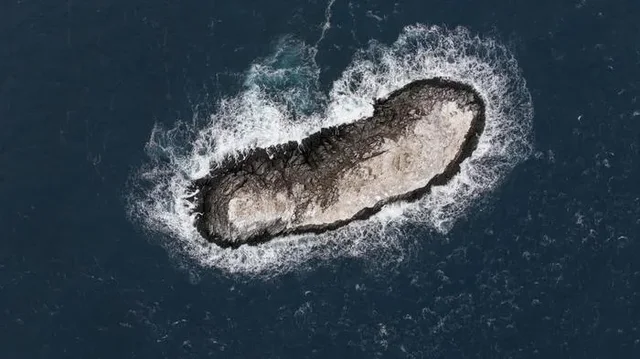
An unusual discovery has stunned the scientific community, as explorers have identified a new island near the shores of Antarctica, which until now had been mistaken for a dirty iceberg.
The discovery was made by a team from the Alfred Wegener Institute (AWI), who were aboard the icebreaker "Polarstern" during an expedition in the Weddell Sea. According to reports, harsh atmospheric conditions and a severe storm forced the team to seek shelter near Joinville Island, when they noticed a strange brown mass in the middle of an area marked on nautical charts as a dangerous navigation zone.
Initially, scientists thought it was an iceberg covered in debris. Simon Dreutter, a specialist in underwater studies, said the object looked like a "dirty iceberg" when viewed from afar through the ship's window.
However, after closer observation, the team realized the object was actually a rocky mass. "The closer we got, the clearer it became that we were facing an island," Dreutter stated.
To confirm the discovery, researchers used drones and sonar equipment to measure the underwater terrain. The results showed the island is about 130 meters long and 40 meters wide, rising 16 meters above sea level. According to experts, its length is almost that of the Great Pyramid of Giza in Egypt.
Scientists said the island had not been identified earlier due to the ice layer that made it appear as part of the surrounding icebergs in satellite images.
So far, the island has not yet received an official name, while on social media users have started suggesting various names for it.