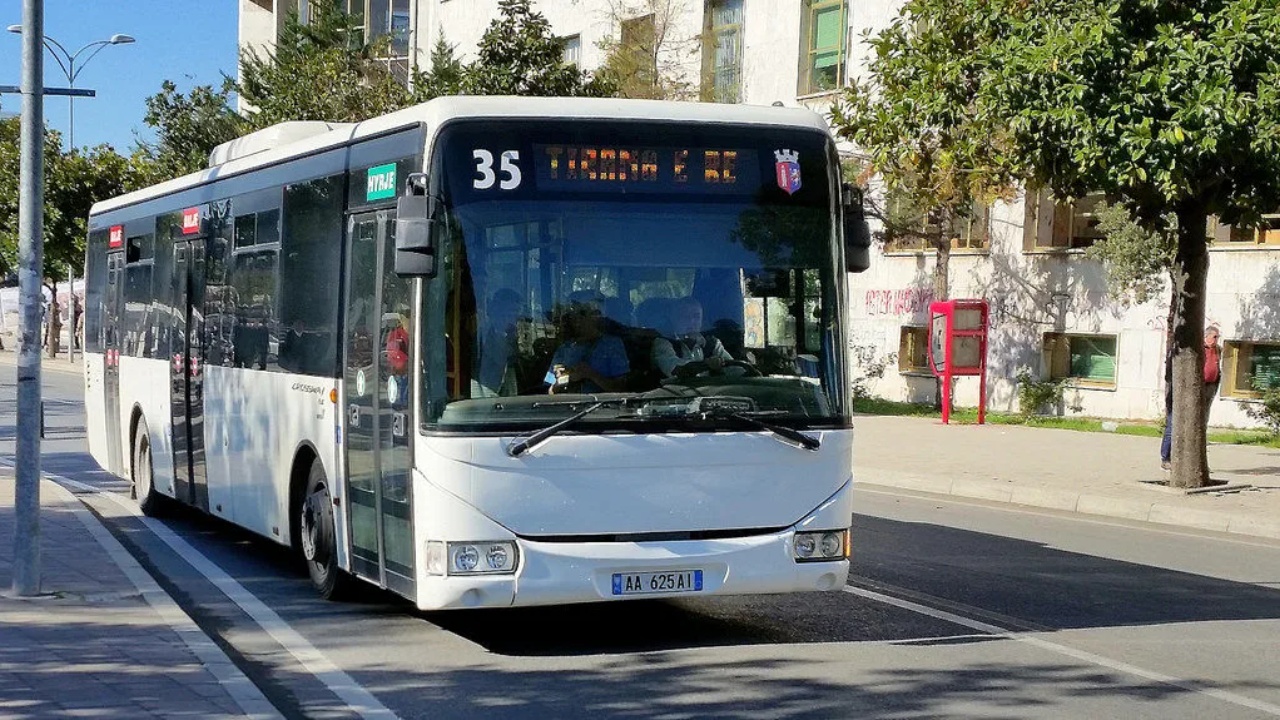
Public transport associations in the country have warned that without urgent intervention from institutions, services for some urban and interurban lines may be suspended starting next week.
In a letter addressed to the Ministry of Economy and Innovation, the Ministry of Infrastructure and Energy, and the Municipality of Tirana, the associations are requesting information on the progress of reviewing their demands, where the main issues remain the establishment of a fuel compensation mechanism and a compensation of about 100 lek per liter.
According to the associations, following the meeting held on April 1, 2026, between representatives of institutions and operators, another meeting was promised for April 7, which did not take place. So far, they emphasize, there has been no official response or institutional stance regarding the submitted demands.
The associations stress that the public transport sector is in a deep economic crisis, resulting from a significant increase in operational costs due to rising fuel prices, increased maintenance costs, spare parts expenses, and fiscal obligations.
"Simultaneously, it remains essential to promptly address the fiscal elements burdening operators, including excise duties, circulation tax, and VAT, to create more comprehensive and sustainable support for the sector. However, at the moment, the absolute priority remains emergency intervention, as the current situation cannot wait and cannot be borne solely by operators for an extended period," they stated.
SUBJECT: Request for information on the progress of institutional coordination and for urgent intervention in support of the public transport sector.
To the Ministry of Economy and Innovation, Ministry of Infrastructure and Energy,
Following the meeting held on April 1, 2026, between representatives of institutions and the public transport sector, we are addressing you again on behalf of the National Association of Urban Transport and the Association of Urban and Interurban Transport, to request information regarding the progress of reviewing our demands, as well as to seek immediate emergency intervention in support of this sector.
To date, despite the severity of the issue and the urgency of the situation, the promised follow-up meeting scheduled for April 7, 2026, has not been held. We have received no official response, concrete information, or institutional stance on how our submitted demands will be addressed or on the measures planned to assist public transport operators. This lack of information and response is further exacerbating the financial and operational uncertainty of the entities engaged in this activity.
As was made clear during the meeting, the public transport sector is in a very difficult economic situation, resulting from a significant increase in operational costs, particularly for fuel, maintenance, spare parts, and other obligations directly related to service provision.
In the absence of swift and concrete intervention from the responsible institutions, operators will not have the financial means to sustain normal operations starting next week. Consequently, if institutions do not respond, as emphasized above, the continuity of public service for citizens will be seriously jeopardized starting next week.
For this reason, we request that clear information be provided to us as soon as possible regarding the steps being taken by the relevant institutions in relation to our demands, as well as the specific deadlines within which a decision is expected. Prolonging this issue indefinitely makes the situation unbearable and leads the sector toward the real impossibility of guaranteeing service.
We reiterate that our main demand, presented after the first meeting, relates to the need for the approval of an emergency support package, specifically the establishment of a financial compensation mechanism for fuel, similar to VKM No. 225, dated April 13, 2022, at a level that reflects the actual cost increase and enables immediate stabilization of the situation. Such a measure is essential to avoid fleet reduction, decreased service frequency, and further deterioration of public transport operations.
Simultaneously, it remains essential to promptly address the fiscal elements burdening operators, including excise duties, circulation tax, and VAT, to create more comprehensive and sustainable support for the sector. However, at the moment, the absolute priority remains emergency intervention, as the current situation cannot wait and cannot be borne solely by operators for an extended period.
The public transport sector represents a service of special public and social importance. Consequently, untimely intervention not only affects economic operators but directly undermines the public interest, the citizens who use this service, and the normal functioning of urban and interurban life. For the above reasons, we request:
Immediate official information on the progress of reviewing our demands following the meeting of April 1, 2026; Determination of a concrete institutional stance regarding the measures to be taken to support the sector; Urgent intervention for the approval of an emergency support package, aimed at preventing the financial collapse of operators and ensuring the continuity of public service.
Awaiting a swift and concrete response from you.
National Association of Urban Transport Association of Urban and Interurban Transport