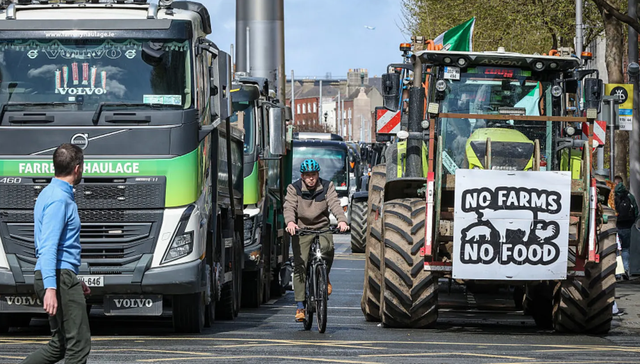
Ireland is engulfed by massive protests against rising fuel prices, which have now entered their fourth day. Demonstrators have blocked three of the country's refineries and major terminals, partially paralyzing the supply chain.
The protests are primarily led by farmers, agricultural contractors, and road transport operators, who express dissatisfaction with the government's response to the price hikes since the onset of tensions in the Middle East.
According to international media reports, major sector organizations, such as the Irish Farmers’ Association and the Irish Road Haulage Association, are not involved in these protests.
The increase in fuel prices is being felt globally as a consequence of the conflict in the region. British Prime Minister Keir Starmer stated he was "fed up" seeing fluctuations in energy bills in the United Kingdom, which he attributed to the actions of Donald Trump and Vladimir Putin.
Meanwhile, oil markets have reacted with volatility as shipping flows through the Strait of Hormuz remain constrained.
Protesters have warned they will continue their action until securing a meeting with the government to address their demands. On the other hand, Irish authorities have placed the army on standby to intervene in case the situation escalates.
The Irish government had earlier announced a support package of 250 million euros for families and businesses, including a reduction in fuel excise duty. Finance Minister Simon Harris stated that the situation remains unstable and requires flexibility in response.