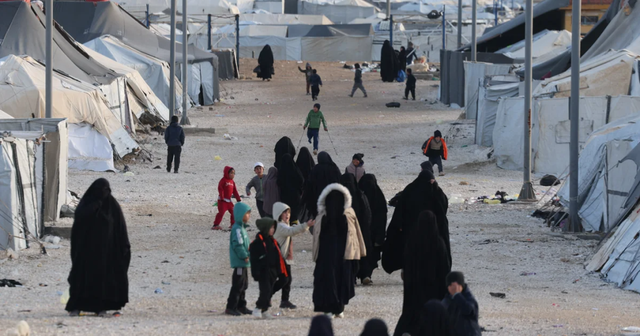
The Guardian has published a lengthy article on the story of Eva, an Albanian girl who, after more than 12 years of suffering in Syrian camps, has returned to Albania. Eva Dumani was abducted at the age of 9 along with her brother by her father, who was later killed fighting for the Islamic State. After many years spent in the notorious al-Hawl camp, where thousands of women and children from over 40 countries have been arbitrarily detained, Eva managed to escape and return to her family in Albania. Her uncle, Xhetan Ndregjoni, who awaited her at the Turkish-Syrian border, described the reunion as an unforgettable moment. "We have waited for this day for 12 years," he said. "It was incredibly emotional when she saw her brother and mother." Eva, now 20, has started high school and is trying to recover the lost years of her education. The Guardian highlights that Eva's case is one of the few successful examples of repatriation, while dozens of other Albanians, women and children, remain trapped in Syrian camps. Now, Eva's uncle's concern has shifted to the approximately 25 Albanians who remain stuck in northern Syria. "We ask the government to bring home the other children in this situation; it is very important that they too be with their families," he said. About 6,000 foreign nationals from countries like Serbia, Bosnia, and Albania were detained in al-Hawl after the fall of ISIS in 2019, many of them women and children. Most have suffered for years under conditions that Human Rights Watch described as "inhumane, degrading, and life-threatening," marked by chronic shortages of food and medicine, as well as violence from women still loyal to ISIS. Human rights organizations warn that children and their mothers are at immediate risk from extremist groups operating in the area. The article also mentions that many European countries and Australia are facing similar dilemmas, as the al-Hawl and al-Roj camps are disbanding and detainees are attempting to leave on their own. Experts warn that governments can no longer turn a blind eye and must develop clear plans for repatriation, rehabilitation, and security monitoring. "People will return, whether states want it or not, especially if they manage to escape," said Devorah Margolin, a senior fellow at the Washington Institute for Near East Policy. Margolin said the emptying of the camp shows that governments that have hesitated or refused to repatriate their citizens can no longer close their eyes. "People will return to Europe. And it is much better to have a clear plan to address trauma, reintegration, and security than to allow them to enter secretly and not deal with them at all. That is an invitation for trouble," she said.
Society
"12 Years Old," The Guardian writes about the repatriation of Eva Duman: Fear and uncertainty for other children
The Guardian has published a lengthy article on the story of Eva, an Albanian girl who, after more than 12 years of suffering in Syrian camps, has returned to Albania. Eva Dumani was abducted at the age of 9 along with h
ingestionalbania