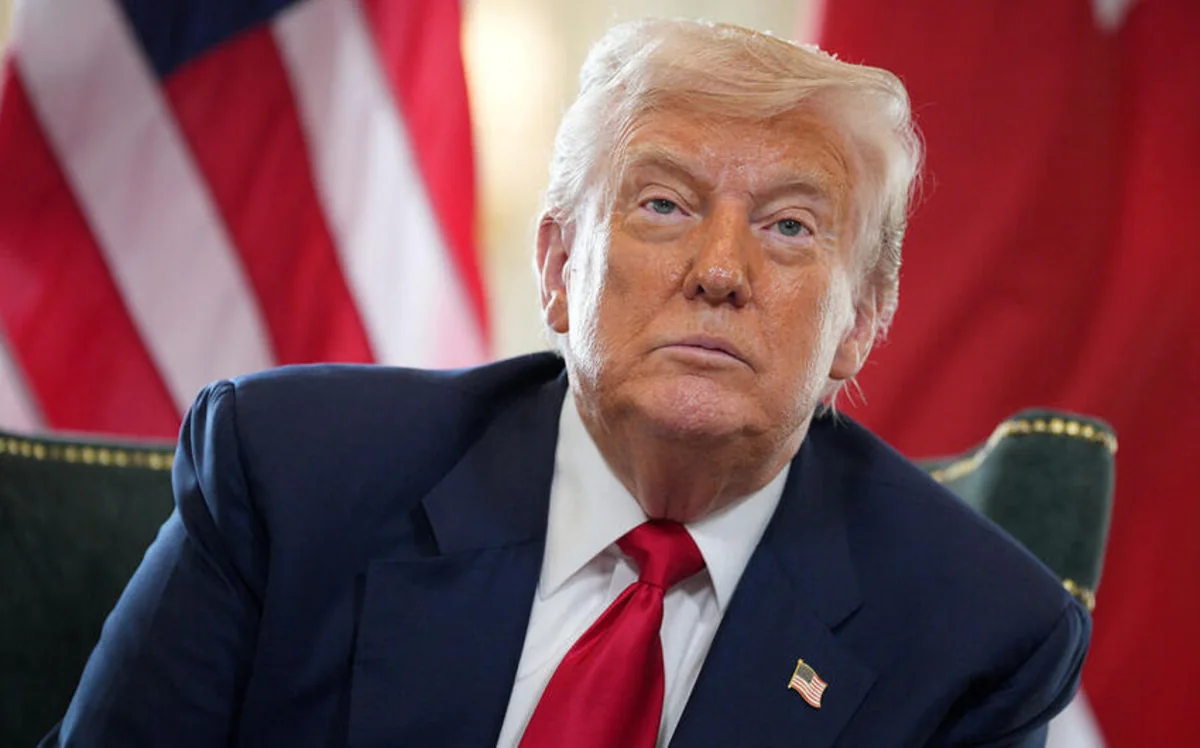
Global energy markets have been shaken after U.S. President Donald Trump warned that the United States will strike Iran "exceptionally hard" in the coming weeks.
In a national address from the White House, Trump stated that key military objectives in Iran are nearing completion within two to three weeks, but simultaneously threatened further attacks, significantly escalating tensions in the Middle East.
In a message to the nation regarding the Middle East conflict, Trump also criticized U.S. allies concerning the Strait of Hormuz: "We do not import oil through Hormuz; we don’t need it. Countries that get it from there, get it themselves. As soon as the war ends, the Strait will naturally reopen."
According to the President, the U.S. is "completely independent from the Middle East," adding that the American presence in the region is solely aimed at supporting allies and not due to a need for their resources: "We are there to help our allies; we don’t need anything they have."
The President emphasized that regime change was not a U.S. objective, though "the elimination of historical leaders" resulted in the emergence of a more reasonable leadership. Trump warned that if an agreement is not reached, the U.S. will strike Iran’s energy facilities.
Immediately after the speech, oil prices in international markets rose by about 5%, surpassing $105 per barrel. Investors reacted with concern, while stock markets in Asia experienced declines.
One of the main reasons for the uncertainty remains the situation in the Strait of Hormuz, a vital corridor through which about 20% of global energy supply passes. Threats of its closure or destabilization have an immediate impact on global prices.
On the other hand, Iran has denied claims that it sought a ceasefire, describing the U.S. president’s statements as false.
Analysts say the speech did not provide a clear plan for ending the conflict, adding uncertainty to markets and the international arena.
At a time when geopolitical tensions are rising, the direct impact is being felt not only in global stock markets but also in energy prices affecting consumers worldwide.