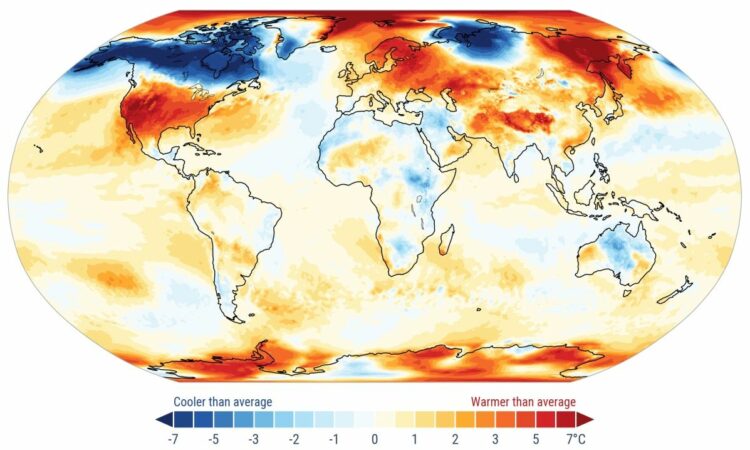
March 2026 ranked among the hottest ever recorded, raising new concerns about the acceleration of climate change. According to the Copernicus Climate Change Service, it was the fourth warmest March globally and the second warmest ever recorded in Europe.
The data also show that global sea surface temperatures reached the second highest level on record for March, just after 2025, reflecting a possible return of the El Niño phenomenon.
Carlo Buontempo, director of the climate service at the European Centre for Medium-Range Weather Forecasts, described the data as "disappointing," warning of a climate system under continuous stress.
According to the report, March 2026 was about 1.48°C above pre-industrial levels (1850–1900), while Arctic sea ice reached its lowest extent ever recorded for this period.
Almost all of Europe experienced above-average temperatures, with the hottest conditions recorded in northwestern Russia, northern Scandinavia, and the Baltic countries.
Meanwhile, strong contrasts were observed in other regions: parts of the United States and Mexico experienced early heatwaves, while Alaska, Canada, southern Greenland, and northwestern Siberia faced exceptionally low temperatures.