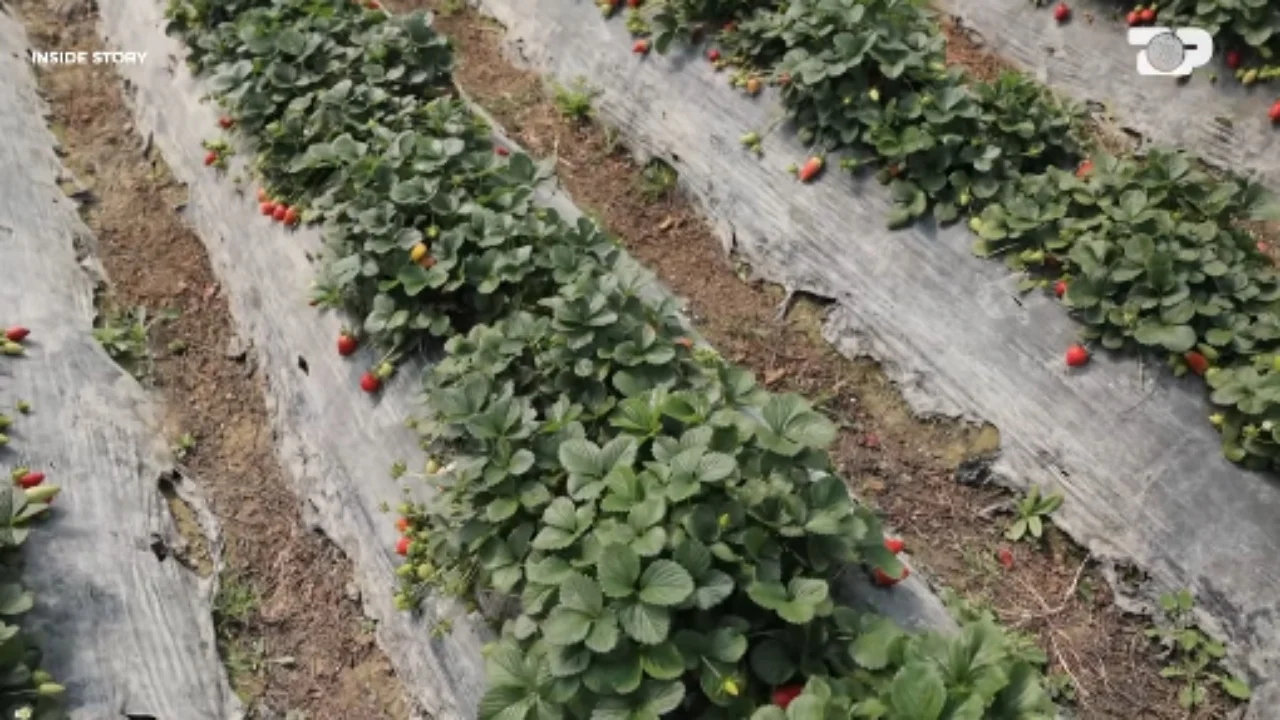
In the village of Kafaraj in Fier, known for strawberry cultivation, it is the peak of the season. Mondi Hamataj has been involved in this crop for 14 years. He has just harvested his produce and delivered it to collection points. However, like all other farmers in the area, he is walking blindly, as this sector operates in informality. None of the farmers have contracts with the collectors. They do not know what price they will receive for their products; there is no guarantee that their work and effort will translate into income. Thus, they are imposed cartel prices for their sweat. "The most difficult question today is to ask a farmer how much he sold for today? We send it without a price because that's how the game has been set from the beginning, and we expect that when they sell it, they will take a profit, and whatever remains for us, we find out after a week. It has been functioning like this for 12 years. You just count the crates, and when the money becomes water, then after two weeks...", expressed farmer Mondi Hamataj. The collectors' market not only operates without invoices and in informality, but in many cases, they do not pay for years for the products they have received. "It is very difficult, and I do not wish it on any of the young people who say don't get into it because you will suffer. I have been selling cabbage for 5 years and still haven't received the money... at Doni Fruit, I have 2.3 million lekë with invoices and contract agreements, and they still haven't paid me", expressed farmer Mondi Hamataj. This crate of strawberries, Mondi says, during the day Inside Story visited in early April, he sold at the collection point for 500 lekë. This crate averages 10 boxes, which at the same time were sold at stalls for a price of 150-200 lekë each, totaling 2,000 lekë. Thus, the farmer receives only ¼ of the price, which includes production costs and profit. Meanwhile, ¾ of the price is divided among the collector, the wholesaler, and the retailer, who do not bear the farmer's costs. "Subsidies should increase at least for this type of fruit, 5 million for a dynym of greenhouse, and you give me 200 thousand lekë. But I have been flooded for 5 years? There are 40 farmers here who have given up on strawberries, have fallen into debt because they took loans, and are now working in Greece to pay off that debt", expressed farmer Mondi Hamataj. "We demand that there be a sales exchange for the produce here, that the government implements an exchange. Not for the collector to decide, but for the regular exchange to decide the payment. We have a farmer who has 400 sheep and has nowhere to deliver the milk and is forced to feed it to the lambs", expressed agronomist Hazis Sava. Only in this area, there are about 1000 dynymë planted with strawberries. Due to low purchasing power, about 70% of the production goes for export, and only a small part remains in the domestic market. This causes sales points in Albania to be flooded with imported produce, even though strawberries cultivated in Albania are of better quality. "We have come to the conclusion that we have planted the wrong fruit in the wrong place because this is a luxury fruit. It costs to produce it; it costs 800-1000 lekë at the moment of picking, we invest 5 million to get 2 million. Someone will ask, if it doesn't work out, why did you increase the area? I increased it because it doesn't work out, and by increasing the area, something remains for us to justify the work", said farmer Mondi Hamataj.
Society
Imported strawberries 'suffocate' the market, Kafaraj farmers: Local collectors impose cartel prices on us.
In the village of Kafaraj in Fier, known for strawberry cultivation, it is the peak of the season. Mondi Hamataj has been involved in this crop for 14 years. He has just harvested his produce and delivered it to collecti
ingestionalbania