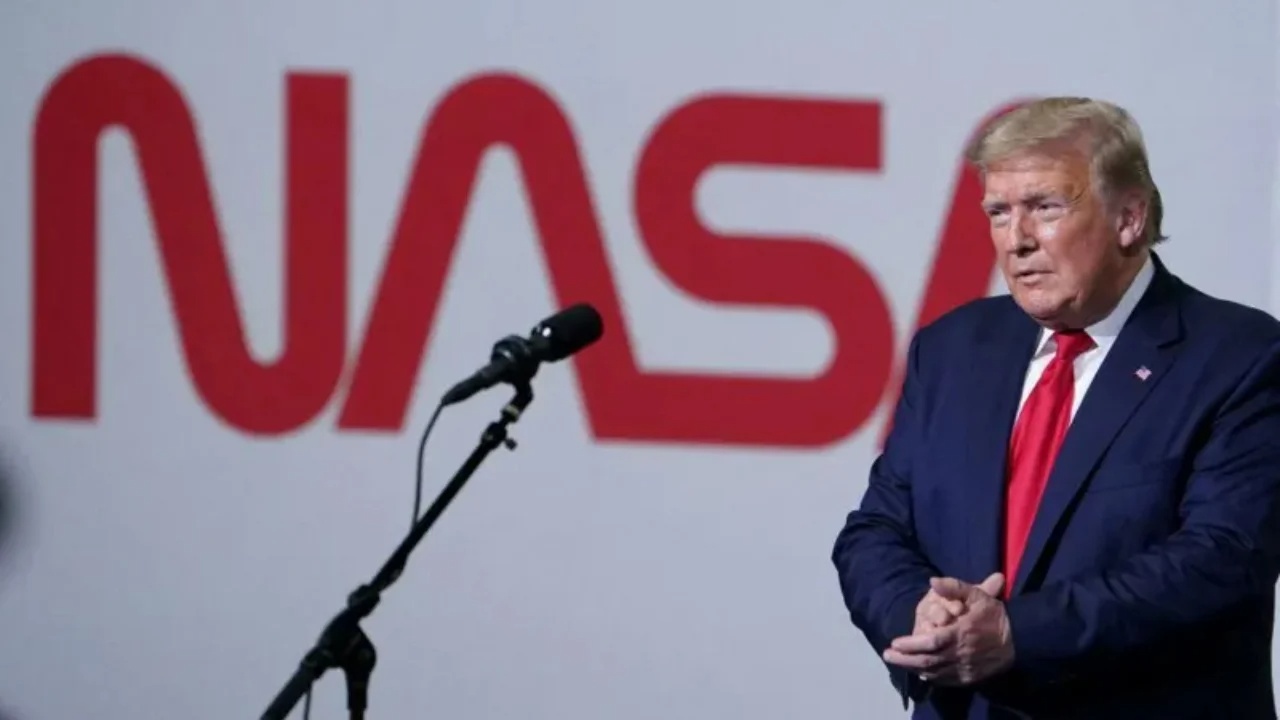
U.S. President Donald Trump sees the new Moon mission as a strategic opportunity to strengthen the "America First" policy, as NASA prepares to send four astronauts into space at a critical political and geopolitical moment.
The Artemis mission, the first aiming to send humans to the Moon since 1972, comes at a time when the U.S. faces deep internal divisions and international tensions, including conflict with Iran and issues such as immigration and the economy.
According to NASA, this mission aims to serve as a step toward establishing a permanent base on the Moon and, in the longer term, missions to Mars. A success could give the Trump administration a symbolic and strategic victory, including a rare moment of national unity. Donald Trump laid the groundwork for the Artemis program during his first term, emphasizing the ambition to send American astronauts to Mars and also establishing the United States Space Force as a new military branch.
In his second term, the focus has shifted toward the Moon. An executive order signed in December calls for the return of American astronauts to the Moon by 2028 and the construction of a permanent base by 2030. NASA Administrator Jared Isaacman has clearly emphasized the geopolitical dimension of the mission, warning of competition with China in space.
He stated that this time the goal is not merely symbolic but establishing a permanent presence on the Moon, adding that the U.S. does not intend to "lose" it again.