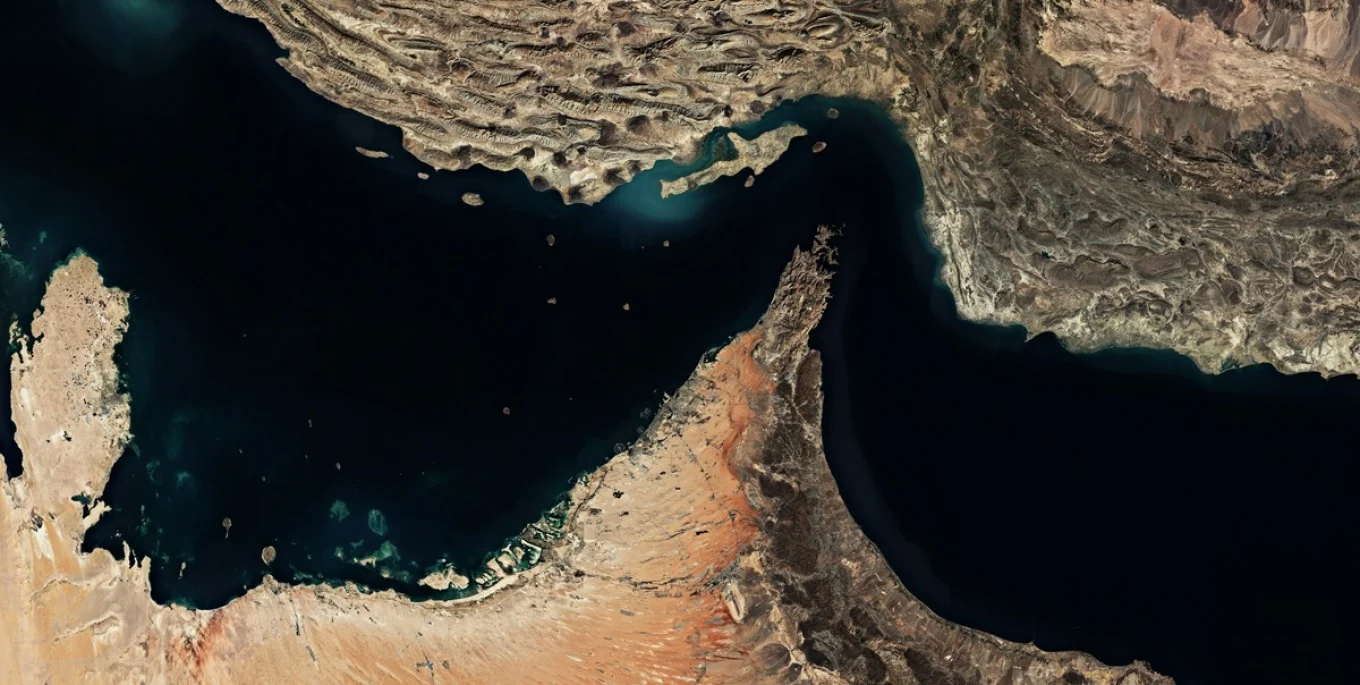
The Islamic Revolutionary Guard Corps Navy has announced that vessels passing through the Strait of Hormuz must follow alternative routes closer to the Iranian coastline due to potential risks from mines in traditional maritime corridors.
According to Iranian media, the decision was made in coordination with naval forces, while a maritime map shows new navigation routes north and south of Larak Island. Recent ship passages appear to have followed these corridors, which primarily traverse Iranian territorial waters.
This development comes despite a two-week ceasefire agreement between the United States and Iran, which also stipulates the full opening of the Strait of Hormuz, a vital artery for global energy supplies. However, traffic remains highly restricted, with only 307 oil tankers passing through the area from March 1 to April 27—a drastic drop of about 95% compared to normal periods.
Under ordinary circumstances, approximately 20% of the world's crude oil and liquefied natural gas passes through this strait, making any disruption a serious threat to international markets.
At the center of this development is Larak Island, located at the narrowest point of the Strait of Hormuz and transforming into a strategic lever for Tehran. Due to its position, the island controls entry and exit from the Persian Gulf, giving Iran significant influence over the flow of global energy.
Since the late 1980s, Larak has been used as an export terminal for Iranian oil and hosts military installations, while recently it has become a monitoring point for maritime traffic. It is often described as "Tehran's tollbooth," as vessels passing through this area are under strict control and must follow corridors designated by Iranian authorities.
Despite its small size, Larak Island is assuming an increasingly significant role in global geopolitics at a time when regional tensions continue to directly impact energy security and international trade.