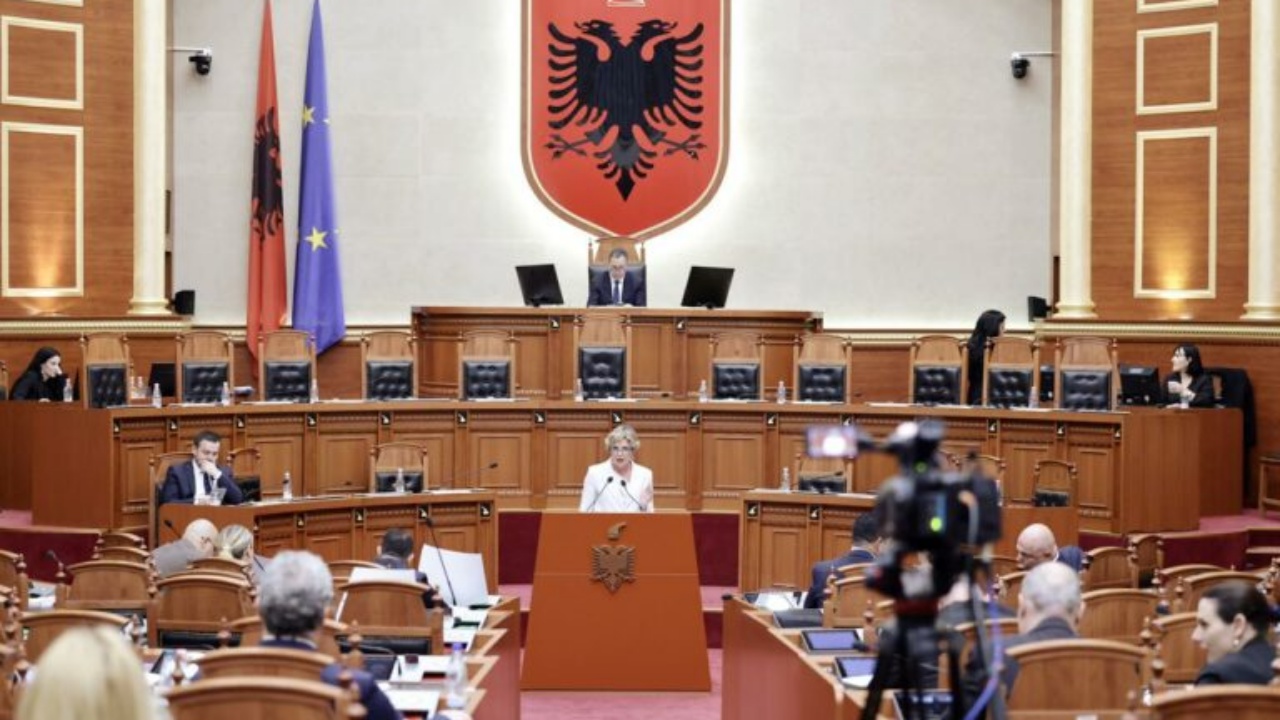
In the Parliament, an interpellation is being held regarding issues in healthcare, and after the speeches of opposition deputies, who raised their questions, Minister Evis Sala also spoke. Initially, she listed advancements in oncology services.
"For many years, oncology services in Albania were almost entirely concentrated in a single structure, creating a chain of problems that everyone knows: patients traveling from all over Albania to Tirana, overburdening doctors and infrastructure, delays in diagnosis and treatment, and above all, a sense of insecurity for the patient. The problem was not just a lack of resources, but how the system was organized and managed.
Today, we have a different reality. Oncology services are organized in a multi-level structure, with a clear objective: to bring the service closer to the patient and make it more standardized across the country. At the tertiary level, oncology services are mainly provided at: the 'Mother Teresa' University Hospital Center, for all diagnoses, and the 'Shefqet Ndroqi' Tirana Regional Hospital Center, for lung cancer. Recently, as part of managerial autonomy, the chemotherapy unit at the 'Queen Geraldine' University Obstetric-Gynecological Hospital is functioning for a number of gynecological diagnoses," she stated.
The minister's speech also continued regarding laboratory analyses, which have faced much criticism in recent weeks due to reports of restrictions in recent months. The minister clarified that this is not true.
"This service, provided through a Public-Private Partnership, has brought a noticeable change in the standard of laboratory diagnostics, significantly increasing the quality and range of analyses available to citizens. From a relatively limited package previously offered, with about 100 analyses in university hospitals and even fewer in regional ones, today 164 analyses are uniformly offered in all hospitals under the contract.
It is important to clarify for all citizens that the service is never interrupted. The contract provides for a monthly planning of the volume and budget of analyses for each hospital, based on history and projected needs. When approximately 75% of this volume is reached, the concessionaire notifies the relevant management structures, as a monitoring and management mechanism for service usage.
At this stage, the service continues normally, but priority is given to urgent analyses and those essential for clinical decision-making. This means that in certain cases, some routine analyses may be postponed, but in no case is the examination, diagnosis, or treatment of the patient compromised. So, every patient who needs an analysis for diagnosis or treatment receives it without interruption. This is a management mechanism to ensure controlled and efficient use of resources, without affecting essential services.
Furthermore, institutions are working to improve planning so that this balance is even more aligned with real demand on the ground. At the same time, we are strengthening control mechanisms in hospitals to ensure better functioning of the service," Minister Sala stated./Top Channel