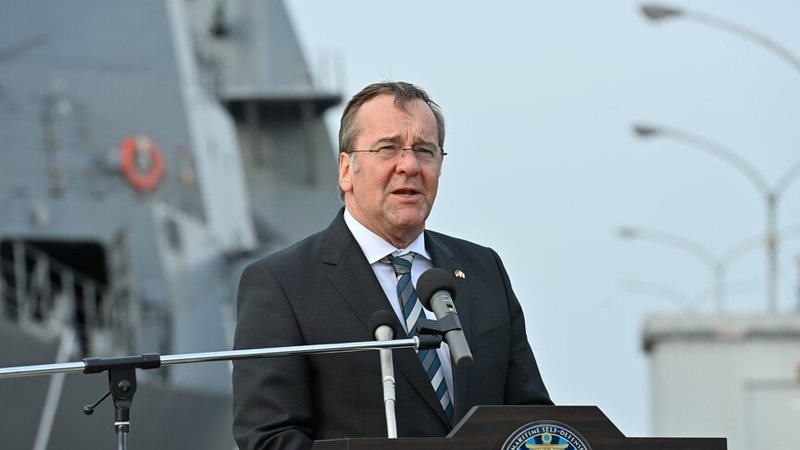
Boris Pistorius presented a new strategic approach to national defense this Wednesday, at a time when Germany is re-evaluating its military role amid rising tensions with Russia.
The German armed forces, the Bundeswehr, are in a phase of deep transformation following recent developments in Ukraine. As part of this effort, Berlin reintroduced a form of voluntary military service at the beginning of the year, aiming to expand troop numbers and increase operational readiness.
The new defense document represents a comprehensive framework for how the military forces will be organized and developed in the coming years. It includes a detailed analysis of existing capabilities and outlines key directions for the army's structure, size, and operations.
Although many elements remain confidential, Pistorius emphasized the ambition to turn the Bundeswehr into the most powerful conventional force on the European continent.
In the assessment of German authorities, Moscow poses the primary security challenge. According to the minister, Russia is strengthening its arsenal and considering the use of military force as an acceptable tool to advance its strategic interests, potentially preparing for a confrontation with NATO.
In this context, the alliance aims to increase its capabilities to around 460,000 troops in response to threats from the east.
The German strategy places particular emphasis on the development of long-range weapons and modern air defense systems. Simultaneously, it aims for significant investments in advanced fields such as artificial intelligence, quantum computing, and robotics, as part of a broader technological transformation.
As Pistorius stated, the plan is divided into several phases: immediate strengthening of defense and resilience, significant expansion of capabilities in the medium term, and, in the long term, achieving clear technological superiority in the military field.