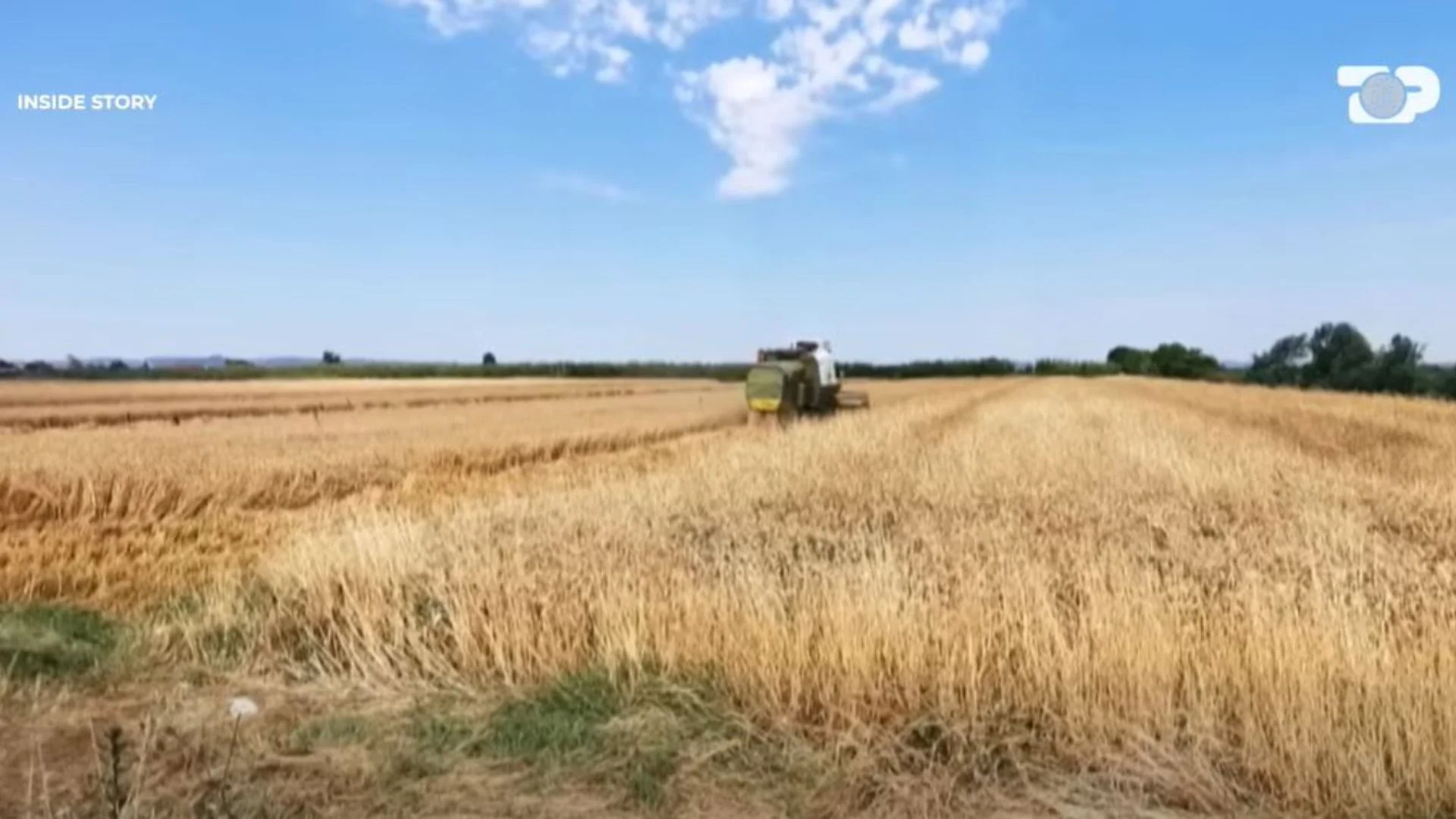
The paradox lies in the fact that, despite this minimal support, Albania has extraordinary production potential. Due to its favorable climate, Albania is considered the "queen of tomato production," surpassing all countries in the region combined.
However, this potential is not properly utilized due to a lack of investment and structural support.
"If you put all the Balkan countries together, they do not match the 308,000 tons of tomatoes that Albania produces. We have competitive potential, but we do not support it," said Ilir Piliku, an agricultural policy expert.
The lack of funding is directly reflected in production. Farmers use several times less fertilizer and pesticides than the European average. Not by choice, but because they lack the economic means.
"The farmer does not have the economic power to buy inputs to use and increase yields. Financing is always one of the problems, but it is one of the problems that never finds a solution in Albania," Piliku stated.
At the end of March, the government approved the national agricultural scheme, with a fund of 2.5 billion lekë or about 25 million euros. This new scheme underwent some radical changes, some of which were met with criticism. The scheme implemented a modest increase in support through direct subsidies for farmers raising cows, small livestock, bees, pigs, and other agricultural products. Additionally, for the first time, a support of 7,000 euros is offered to those who want to engage in agriculture for the first time, and it will recognize 10% of VAT for every product sold. However, at the peak of price increases, the fuel support scheme was removed, which farmers bought at market prices.
"The national scheme does not increase food security. Today, the national scheme does not make Albanian livestock breeders and farmers minimally competitive with the region and then with Europe. In other words, this scheme does not directly address the issues or reasons for which it was created. I must emphasize, the national scheme is not just some money for some breeders or farmers. The national scheme is food security, it is development, it is technology, it is increasing the competitiveness of our breeders and farmers. First, by meeting national needs since they are a food reserve for our economy, and second, by overproducing and exporting and competing with the region, why not even Europe," said Ervin Resuli, president of the Veterinarian Order.
"Yesterday, I paid 2,240 lekë for 200 liters of fuel. With that, I cannot cover one job, and this is making us give up because we have no means. We are also in debt to banks, plus we cannot find workers," said Spahi Jahaj, a farmer.
Experts consider the removal of the fuel scheme arbitrary, as it penalizes the weakest part of the Albanian economy. According to them, the fuel scheme, which had been implemented for several years, was removed without any analysis and in the midst of a price increase crisis, without taking any measures, while all countries in the region have started distributing subsidies.
"The bad part was that the decision to remove the fuel scheme was made one week after the effects of the crisis had erupted. And to remove it at this moment when countries in the region undertook other packages. The Greek government compensated 15% of agricultural input prices. The Italian government decided that farmers will receive a 20% compensation on all fuel bills from March 1 to December 31, 2026. And both countries, Greece and Italy, have fuel schemes where farmers get dyed fuel. They do not pay the price that other consumers pay," said Eduart Sharka, an agriculture expert.
Referring to the price increases as a result of the conflict in the Middle East, experts say that unlike the situation in Albania, governments in the region are using three financial instruments to mitigate the crisis: distributing subsidy packages, reducing the fiscal burden, and compensating bills.
"I believed that the fuel scheme should have been applied as it was in 2025, to be given, to take the 2025 files, all farmers who were declared winners and to give them fuel now, and that control should have continued because they needed it now. Paradoxically, it was removed…," said Eduart Sharka, an agriculture expert.