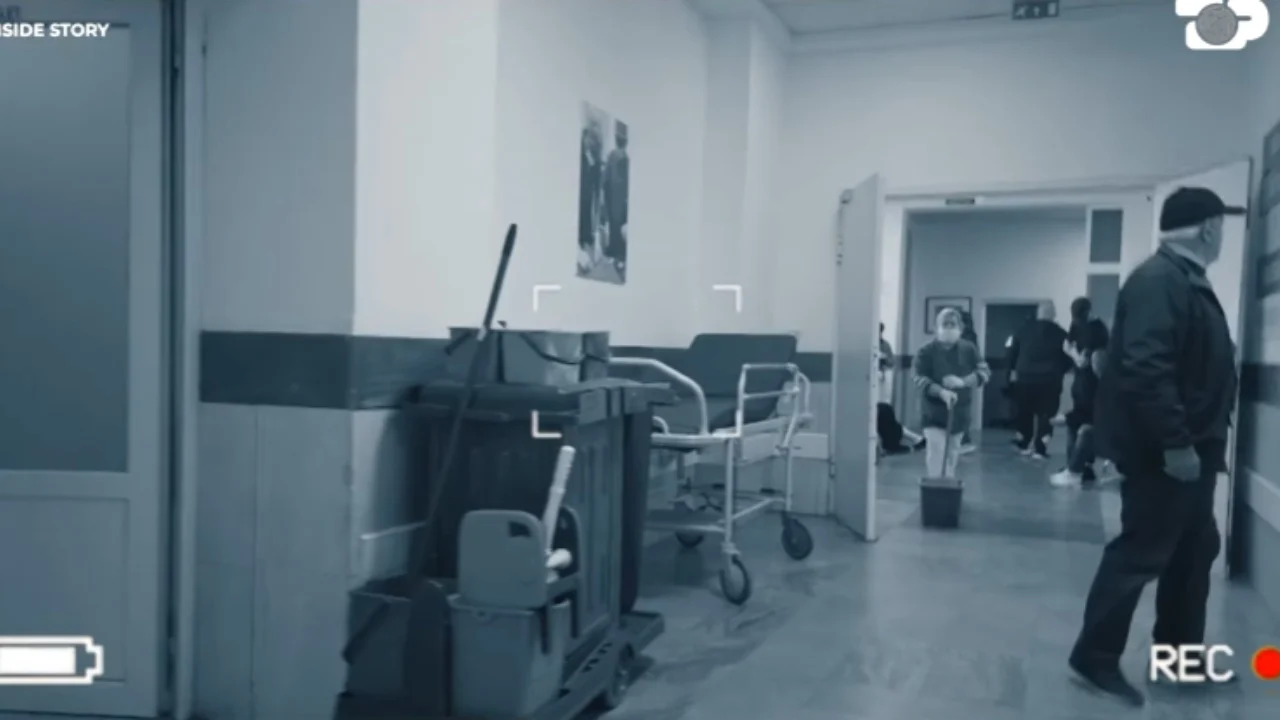
We have learned that the closure of hospital wards may involve another factor. Beyond reconstruction, it is believed that the chaotic situation is also linked to another alarming issue detected in 2 of the closed wards and in the intensive care unit. Staff discovered two dangerous microbes in patients' wounds and another microbe in the ICU. Infections caused by these microbes affect the overall health condition of patients and staff.
"We are seeing a great deal of negligence, with institutions failing to anticipate and prevent this harm," stated Dr. Eglantina Bardhi of Together for Life.
Seemingly, the operating room and ICU should be the safest spaces in a hospital, but when infection control fails, they become the most dangerous source of threat to patients' lives.
"Inside Story" submitted a second information request to the University Hospital of Trauma to inquire whether routine inspections had detected bacteria in the operating rooms or ICU, but we received no response by the time this documentary aired. We also submitted an information request to the Institute of Public Health regarding these reports from sources within the hospital. The official response indicates that the most recent inspection at the Trauma Hospital was conducted in 2024.
"The latest monitoring by ISHP for some services was carried out in early 2026, while for other services the process is ongoing. ISHP has also conducted assessments in maternity hospitals, specifically: 'Shefqet Ndroqi' Hospital, last assessed in 2025; University Hospital of Trauma, last assessed in 2024; 'Queen Geraldine' Maternity Hospital, last assessed in 2024; and 'Koço Gliozheni' Maternity Hospital, last assessed in 2022."
ISHP emphasizes that hospitals themselves have their own laboratory capacities and, through their hospital infection control units, conduct systematic monitoring of microbial presence in hospital environments.
Three of the most problematic bacteria reportedly detected at the Trauma Hospital are 'Acinetobacter baumannii', 'Staphylococcus aureus', and 'Pseudomonas aeruginosa'. All three of these bacteria were also found by ISHP during inspections, but in the response provided to "Inside Story," the institution did not specify in which hospitals they were detected.
From conducting microbiological examinations, it has been found that microorganisms such as Escherichia coli, Staphylococcus aureus, Pseudomonas aeruginosa, and Acinetobacter baumannii have been identified in specific cases and not in a generalized manner.
However, this is information that requires official confirmatory responses from the Trauma Hospital or other relevant line institutions, as well as clarification on the concrete measures taken to isolate the risk.
But what are the consequences caused by these bacteria found by ISHP in the public hospital network?
These are not ordinary infections; they are often highly antibiotic-resistant and are directly linked to hospital-acquired infections. The consequences vary. If a surgical wound becomes infected, it prevents the wound from closing, worsens it, and necessitates another intervention. Deeper infections involve muscles, tissues, and even bones; if it progresses to blood poisoning, it seriously threatens the patient's life. When it comes to prosthetic placements, these bacteria can lead to the complete failure of the surgical intervention.
"In this case, you're telling me about 3 bacteria, among the most common we have in Albania... these three also indicate a lower level of disinfection in the wards and a deficiency. We see lower performance in every link we have," stated Dr. Ilir Alimehmeti.
In response to our inquiry, the Trauma Hospital emphasized the performance of routine sterilizations but neither confirmed nor denied the findings regarding the detection of bacteria in the wards.
Trauma: Operating rooms are sterilized after every intervention, and the Hospital Infection Control Sector monitors them, with ongoing verification of protocol implementation and periodic sampling.
'Staphylococcus aureus' is among the main causes of surgical wound infections, especially in its resistant form. Meanwhile, 'Acinetobacter baumannii' is particularly dangerous due to its high resistance to many antibiotics.
"When we talk about wards not meeting standards and conditions and about hospital-acquired infections, unfortunately, we do not have a good study on hospital-acquired infections, on the number of people who contract them; they are a major problem," stated Dr. Besnik Jakaj.
In the ICU, patients at risk from bacteria are those who are intubated, have catheters, or have weakened immune systems. In this environment, 'Pseudomonas aeruginosa' becomes a serious threat: ventilator-associated pneumonia, which is one of the leading causes of mortality; blood infections; urinary infections from catheters; worsening of overall condition and prolonged stay in intensive therapy. This bacterium is known for its survival in hospital environments and resistance to standard treatments.