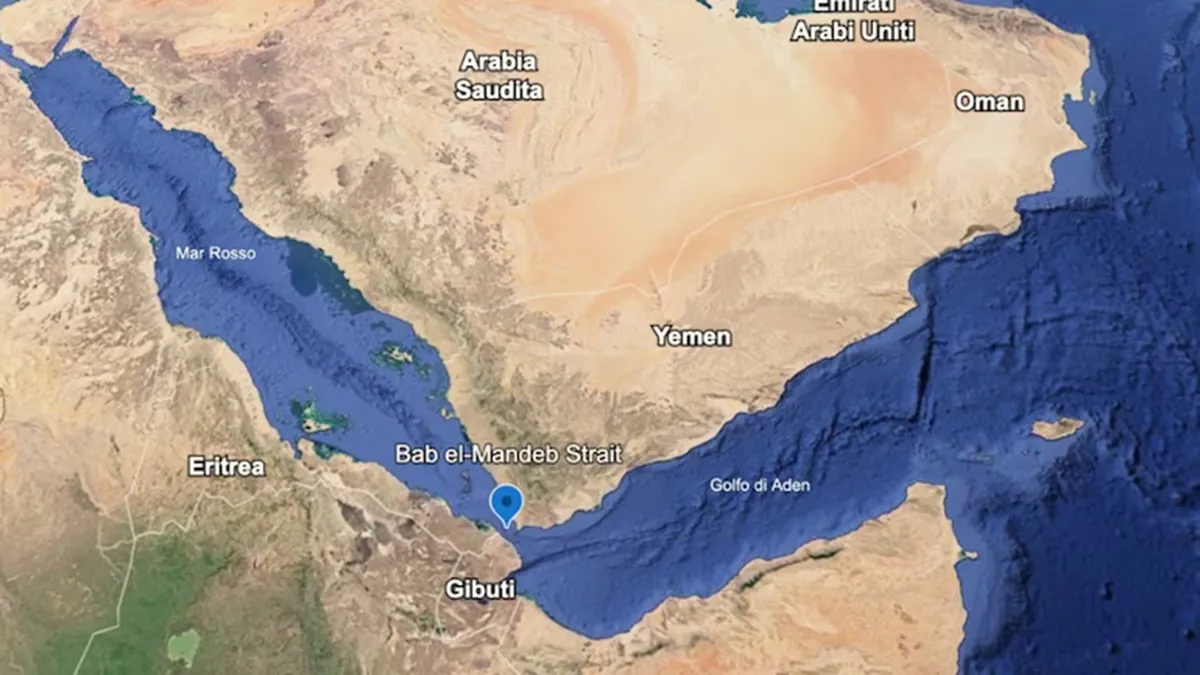
The closure of the Strait of Hormuz has caused chaos in the global oil trade, leading to price increases and uncertainty about the future. Iran has refused to reopen the trade route without compensation for the damage caused by the war and now threatens to block another crucial waterway, the Bab el-Mandeb Strait near the Arabian Peninsula. Since the closure of the Strait of Hormuz, Saudi Arabia has been sending millions of barrels of crude oil per day through Bab el-Mandeb, which connects the Red Sea to the Gulf of Aden and the Arabian Sea. The 32-kilometer-wide strait is one of the busiest for global oil trade. A quarter of global container trade also passes through Bab el-Mandeb on its way to and from the Suez Canal. There are growing concerns that the Houthi rebels may begin attacking ships in the Red Sea now that they have joined the war. Such action would further cripple the maritime industry and the global economy. The disruption of transit through Bab el-Mandeb forces shipping companies to reroute their vessels around the Cape of Good Hope, as they did in 2024 and 2025, significantly increasing costs. The Houthis stated that they will not allow the United States and Israel to use the Red Sea for attacks against Iran. The Yemeni militants are part of Iran's so-called "Axis of Resistance," which includes militant groups in Lebanon, Iraq, and the Palestinian territories. They control the Yemeni capital, Sanaa, and most of the country's north, and since 2014 have been fighting a civil war against the internationally recognized government supported by a Saudi-led coalition.
Society
"We will close all oil routes"/ After Hormuz, Iran threatens with the Bab el-Mandeb Strait
The closure of the Strait of Hormuz has caused chaos in the global oil trade, leading to price increases and uncertainty about the future. Iran has refused to reopen the trade route without compensation for the damage ca
ingestionalbania