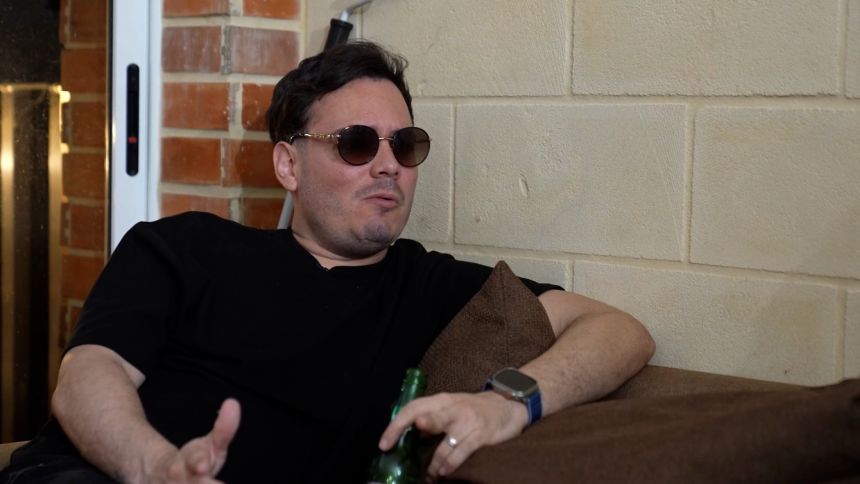
Fidel Castro's grandson believes Cuban society is in a phase of change, with a significant portion of the population viewing a different economic model positively. "There are many people in Cuba who think in a capitalist way. There are many people here who want to implement capitalism," he said. "I think most Cubans want to be capitalists, not communists." This is how Sandro Castro, the grandson of former Cuban leader Fidel Castro, began his interview with CNN.
He has no connection to his grandfather's political image and legacy and lives in a reality completely different from that experienced by the majority of citizens in Cuba. In a country where internet access is limited, Sandro is active as a social media influencer and runs a nightclub, while also having more than 150,000 followers on Instagram.
Daily life for many Cubans is difficult, but Sandro Castro does not hesitate to joke even about scenarios of a U.S. invasion of Cuba. Unlike other members of his family, who maintain a low profile and avoid publicity, the 33-year-old chooses to be in the spotlight, seeking attention and often challenging his country's political system.
Speaking to CNN, he argued that his public image is misinterpreted. "I'm making a video about a tense and sad situation," Castro said, referring to the growing tensions between Havana and the Trump administration, which have further exacerbated Cuba's economic collapse. "At least I'm trying to make people happy. To make them smile. I would never mock a situation that I myself suffer from," he noted.
Through his social media posts, Sandro Castro appears to enjoy a comfortable life that is far removed from the conditions faced by most Cubans. He often criticizes the communist officials who succeeded Fidel Castro, who died in 2016, and Raul Castro, who left the presidency in 2018.
In one of his recent videos, an actor dressed as Donald Trump suggests buying Cuba from him. "We can do business because you are a showman and a businessman like me," the Trump impersonator says. "What would you buy?" Castro responds.
His choice to satirize such scenarios has sparked strong reactions, as Cuban society is experiencing significant hardships, and citizens have been asked to prepare for a possible war. However, he claims he is simply expressing the disappointment felt by many people in the country.
"It's so difficult," he says, describing daily life in Cuba. "You face a thousand problems. One day there might be no electricity or water. Goods don't arrive. It's very difficult, really difficult."
For many Cubans living abroad, Sandro Castro is a symbol of contradiction: the grandson of a leader who defended austerity, now enjoying elements of a capitalist lifestyle. On the other hand, supporters of the regime consider him a person who exploits his origins for personal projection.
He dismisses accusations that he benefits from his name, emphasizing that everything he has achieved is the result of personal effort. "The little I have, I owe to my efforts, my sacrifices. My name is my name. I am proud of my name. But I don't see this help you're talking about. I am an ordinary citizen," Castro notes.
Sandro Castro says he has no intention of limiting his presence on social media, despite pressure even from his family to delete some posts. He admits he has been called in by authorities for explanations but says he was released because he did not incite violence or regime overthrow. Speaking about the future, he expresses ambitions to expand his business activities while criticizing the bureaucracy that, in his view, restricts economic activity in Cuba.
"We must reform the economic model, eliminate bureaucracy. I am a revolutionary, but a revolutionary of ideas, of progress, of change," he said. At the same time, he does not hesitate to express a negative opinion about the country's current leadership. "I wouldn't say they're doing a good job. In my opinion, they're not doing a good job," Sandro Castro said.
Fidel Castro's grandson believes Cuban society is in a phase of change, with a significant portion of the population viewing a different economic model positively. "There are many people in Cuba who think in a capitalist way. There are many people here who want to implement capitalism with dominance. I think most Cubans want to be capitalists, not communists," he concluded.