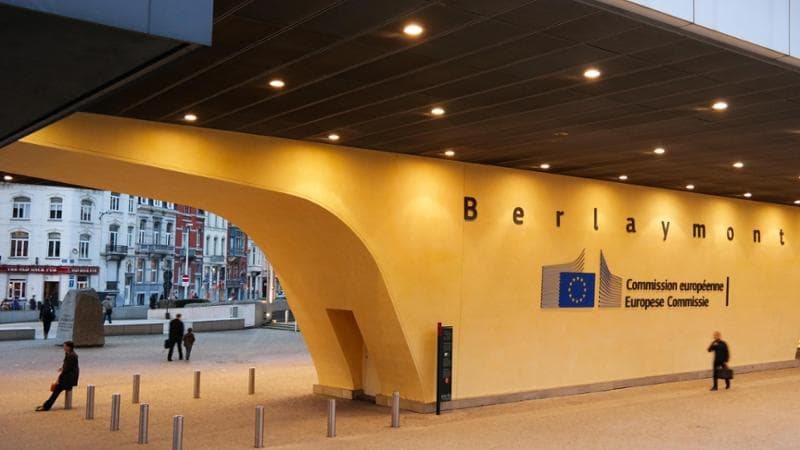
State aid, a tax on excess profits of energy companies, and the use of cohesion funds to combat high energy bills. This is the European Commission's plan to respond to the energy emergency.
La Repubblica writes that the main measures will be approved next week and were defined yesterday morning, April 13, during the extraordinary meeting of the EU executive. The suspension of the Stability Pact is excluded for now because, according to Economic Affairs Commissioner Valdis Dombrovskis, current forecasts show a significant slowdown in growth, but not a recession.
However, all this contains a rather alarming premise formulated by Energy Commissioner Jorgensen and described in a document distributed to colleagues: if the Gulf War continues, there will be a real "shock." The head of the sector was clear, and the document outlines two scenarios. If the conflict ends quickly, then "oil and gas flows will gradually resume over the next one to three months (oil faster than gas). Prices would fall if the Strait of Hormuz were reopened, but geopolitical risk in the region could still have a long-term impact (2027 and beyond)."
This is especially true for gas, which will remain stable until 2030 due to damage to Qatar's infrastructure. Oil supply, on the other hand, will recover within a month.
Conversely, without a ceasefire capable of "restoring confidence," the market will move "from an interruption phase to a prolonged supply shock."
This will lead to difficulties in storing gas in Europe and "potential price increases." A "severe shock" for oil prices and "continuous interruptions" for oil products, i.e., gasoline, diesel, etc., will lead to "subsequent use of reserves and a potential fuel shortage in some regions of Europe."
This will particularly affect air transport. The economic impact will be felt throughout the production chain. Therefore, in the communication to be presented by the Commission next Wednesday, ahead of the European Council meeting in Cyprus the following day, the measures on the table are divided into two packages: immediate and long-term.
Measures to combat the energy shock
Among the first are: greater coordination at the EU level, protecting consumers and industry from price shocks, saving energy, and reducing gas and oil consumption.
This means that replenishing gas and oil reserves will need to be coordinated, "agreeing on the timing of purchases by Member States to avoid price increases due to a surge in simultaneous purchases. Experience shows that uncoordinated storage can lead to the risk of higher gas prices." In short, competition among allies must be avoided.
The same applies to refining, as approximately 70% of our consumption is covered by 73 traditional refineries and 11 biorefineries.
"One in four European refineries has closed in the last 15 years. Five countries account for almost two-thirds of total capacity."
This situation complicates solidarity among the 27 countries. To protect citizens and industries, "targeted, timely, and temporary national emergency measures" will be proposed.
These will then be assessed by the Commission. That is, "targeted income support for vulnerable consumers, facilitating changes to supply contracts" and price interventions. How? Through state aid, which, however, only a few countries will be able to utilize.
Only those with a regular deficit and debt, like Germany, will be able to do this. Certainly not Italy or France. However, the "voluntary" option will be given to redirect unused cohesion funds and those from the National Recovery and Resilience Plan (NRRP) to this area.
The same applies to small and medium-sized enterprises and high-energy consumers. Within this framework, the possibility of a tax on excess profits will be analyzed. Finally, the energy-saving catalog presented in 2022 will be revised. Measures for home insulation and incentives for public transport will also be included.
In the long-term plan, the core idea is to accelerate "the spread of clean energy" and "support Member States in electrification and the production of biogas, biomethane, and solar energy."
Therefore, "increase investments" in clean energy by exploring "the availability of EU energy funds" within the framework of cohesion funds or the Recovery Fund. With a final goal: to become independent.