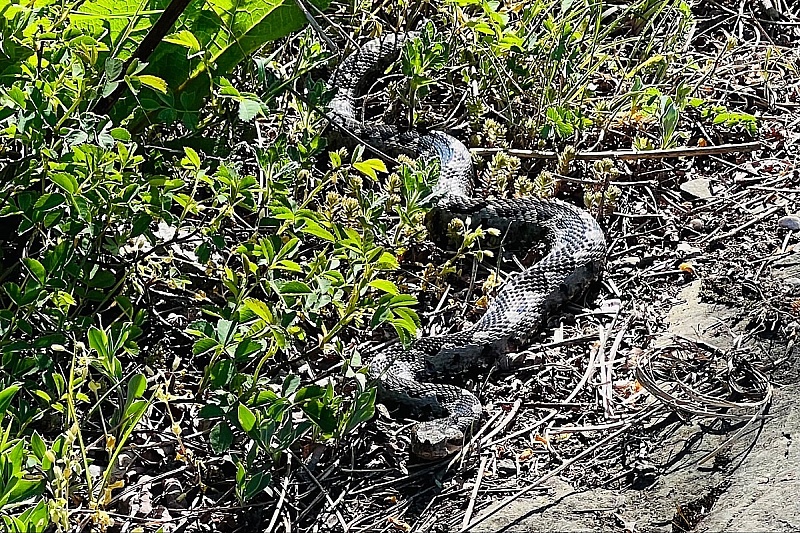
Spending time in nature during warmer days, hiking, gardening and agricultural work, as well as trips into the outdoors, increase the likelihood of unwanted encounters with snakes, which are now more active as they emerge from winter dormancy.
Experts emphasize that most snakes will not attack humans unless they feel threatened. The Emergency Medical Service of the Tuzla Health Center has not recorded any interventions due to snake bites this season, but citizens are advised to exercise extra caution and adhere to basic protective measures.
"When it comes to previous seasons, we mostly had cases of snake bites that caused local reactions, accompanied by swelling, pain, and redness at the bite site. All those patients underwent final therapy at the University Clinical Center in Tuzla. We have not recorded severe systemic reactions," says Lejla Kuluglija Memišević, head of the Emergency Medical Service of the Tuzla Health Center, in an interview with Klix.ba.
When bitten by a snake, the patient generally cannot know whether it is venomous, but the clinical picture is typically dominated by local pain sensitivity and swelling.
Timely arrival at a healthcare facility can significantly reduce the risk of complications, especially when it comes to bites from venomous snakes.
"If a bite occurs, first of all, it is necessary not to panic, and the site of the bite should be immobilized without moving. Rest is very important, without applying cold or warm compresses, along with getting to a healthcare facility as quickly as possible. One of the mistakes is tying off the puncture wounds and sucking out the venom," states Kuluglija Memišević.
If it is a venomous snake bite, our interlocutor notes that systemic and very severe reactions occur, accompanied by multi-organ failure and a lethal outcome. Children, the elderly, and chronic patients are at higher risk of developing more severe consequences.
"Elderly patients generally have comorbidities, compromised immune systems, and are more prone to complications, while children are also at risk because the dose of venom they receive relative to an adult is much stronger," adds Kuluglija Memišević, emphasizing that the Tuzla emergency service currently has sufficient quantities of anti-venom serum.
Our interlocutor recommends wearing closed shoes or high boots, as well as long pants, when moving through nature, which can reduce the risk of bites.
Special caution is needed when walking through tall grass, rocky areas, woodpiles, and dense bushes where snakes often hide.
It is also advised not to reach hands under rocks, stumps, or into holes in the ground without prior inspection.
During hiking and walking, it is recommended to stick to marked trails, while pets should be kept under supervision and away from dense vegetation.