This move, valued at over two billion dollars, has further fueled already tense relations between Washington and Beijing in the race for technological dominance.
Meta, the parent company of Facebook, Instagram, and WhatsApp, intended to acquire Manus for more than two billion dollars. The main goal was to accelerate the integration of advanced artificial intelligence (AI) into its products and strengthen its position in fierce competition with rivals such as Google, Microsoft, and OpenAI.
However, as reported by Reuters, shortly after the announcement of this multi-billion dollar deal, a cold shower came from China. China's National Development and Reform Commission banned the foreign acquisition of the startup and ordered the immediate cancellation of the agreement.
This step perfectly fits into China's broader strategy aimed at protecting domestic tech companies and safeguarding sensitive know-how in the field of artificial intelligence, which Beijing considers a strategically crucial sector.
Manus caught the attention of the global public this spring when it introduced its universal AI agent, a kind of "digital employee." This system is designed to independently perform a wide range of tasks without the need for detailed user instructions. This includes advanced data analysis, programming, market research, and web project development.
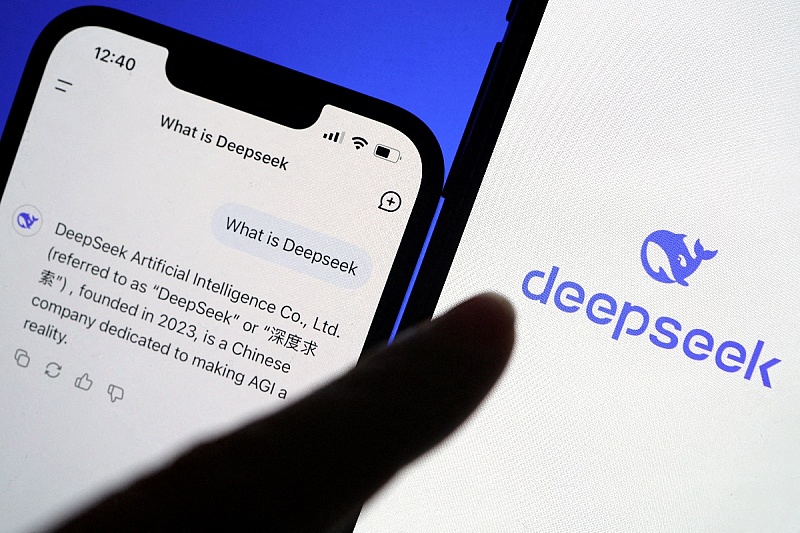
According to claims from the company itself, the performance of this AI agent surpasses even some tools offered by the powerful OpenAI, which is why the startup quickly earned the nickname "new DeepSeek" in IT circles.
Interestingly, although Manus has strong Chinese roots, the company's headquarters are located in Singapore. The move to this global financial center was a tactical move by which the firm attempted to mitigate the consequences of rising geopolitical tensions between China and the United States. The startup is backed by Beijing Butterfly Effect Technology, which has secured tens of millions of dollars in new investments this year alone.
AI as the new battlefield of superpowers
The failed acquisition is the clearest indicator that the battle for dominance in the field of artificial intelligence is increasingly shifting from purely technological frameworks to the realm of geopolitics. It is precisely in this area that tensions between Washington and Beijing are rising again.
Recall that the United States earlier this month openly accused China of widespread technology theft in the AI sector.
White House Science and Technology Advisor Michael Kratsios stated that U.S. authorities have solid evidence of how foreign, primarily Chinese, entities systematically and unauthorizedly access American AI innovations. Washington therefore announced that it would take rigorous steps to protect its technology.
On the other hand, Beijing categorically dismissed these accusations as unfounded, emphasizing that the protection of intellectual property is one of its highest priorities.