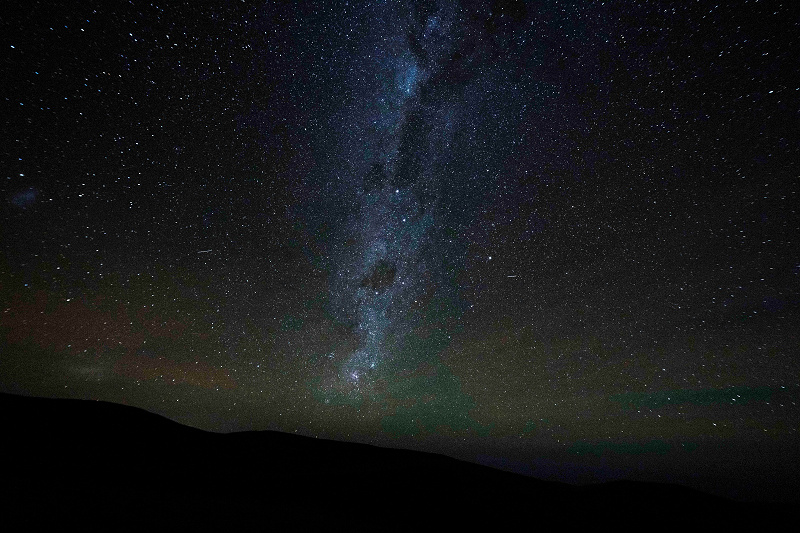
The Atacama is considered the driest place on Earth, and the combination of its arid climate, high altitude, and isolation from urban light has made it one of the world's most important centers for astronomy. Chiara Mazzucchelli, president of the Chilean Astronomical Society, said: "The conditions in the Atacama Desert are unique in the world. There are more than 300 clear nights a year, meaning no clouds and no rain."
Concern intensified last year when an energy company proposed a green energy complex just a few kilometers from the Paranal Observatory. The site is managed by the European Southern Observatory (ESO), and the Extremely Large Telescope (ELT), which is set to be the most powerful optical telescope ever built, is also under construction there.
The project was canceled in January after significant pressure from astronomers, physicists, and Nobel laureates, but it raised questions about Chile's regulations for protecting the night sky. Several environmental rules are under review, including criteria from the Ministry of Science for protected astronomical zones.
In the so-called Photon Valley, multiple observatories operate with highly advanced instruments, and Paranal is one of nearly 30 astronomical sites in northern Chile. The ELT, a $1.5 billion project slated for completion in 2030, will feature 798 mirrors and be 20 times more powerful than today's leading telescopes.
Scientists warn that light pollution, micro-vibrations, dust, and atmospheric turbulence could jeopardize observations. Itziar de Gregorio-Monsalvo from ESO said that if the ELT were placed next to a city, its 40-meter diameter would mean little: "It would be like having a tiny telescope."