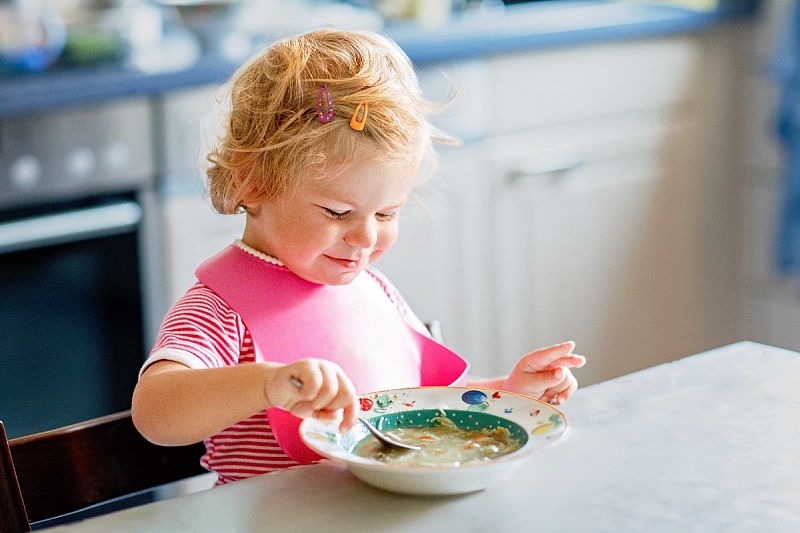
According to guidelines from the World Health Organization (WHO) and other health organizations, meat can be introduced into a baby's diet starting at around 6 months of age. This is the time when most babies develop the ability to digest solid foods, including meat, and when their bodies begin to need additional sources of protein, iron, and other nutrients found in meat.
Chicken is a good source of protein, iron, vitamin B12, zinc, and other nutrients important for a baby's growth and development. Many parents choose chicken because it is tender, easy to digest, and generally less allergenic than other types of meat.
How to introduce chicken into the diet?
Chicken is best introduced in the form of purees that are suitable for the baby's age. Here are a few steps to safely introduce chicken:
Start with small amounts: First, offer a small amount of cooked and finely minced chicken, mixed with vegetables or grains the baby has already tried. Chicken can be steamed or boiled to preserve its nutritional properties.
Monitor reactions: New foods should be introduced to a baby's diet one at a time, with a few days in between, so parents can monitor for any allergic reactions. Chicken is usually safe, but it is important to watch for any signs of allergies, such as rashes, redness, or digestive issues.
Chicken is rich in nutrients important for a baby's development. Here are a few reasons why chicken is a good choice for a baby:
Rich in iron: Meat, including chicken, is a source of easily absorbable heme iron, which is crucial for preventing anemia, common in developing babies.
High-quality protein: Proteins from chicken help in cell growth and repair, as well as muscle building.
Omega-3 fatty acids: Although chicken is not a primary source of omega-3, it still contains these important fatty acids that support brain and eye development.
Easy to digest: Chicken is often easier to digest than other meat sources, making it suitable for a baby's sensitive digestive system.
Note when preparing chicken. First, ensure the chicken is fully cooked and the meat is soft, without bones or tendons, to avoid choking hazards. Then, prepare the chicken without salt, spices, garlic, or onions, as a baby's liver is not yet developed enough to process strong seasonings. Although chicken can be an excellent source of nutrients, it is important to introduce other types of meat, as well as fish, into the diet to ensure a variety of nutrients.