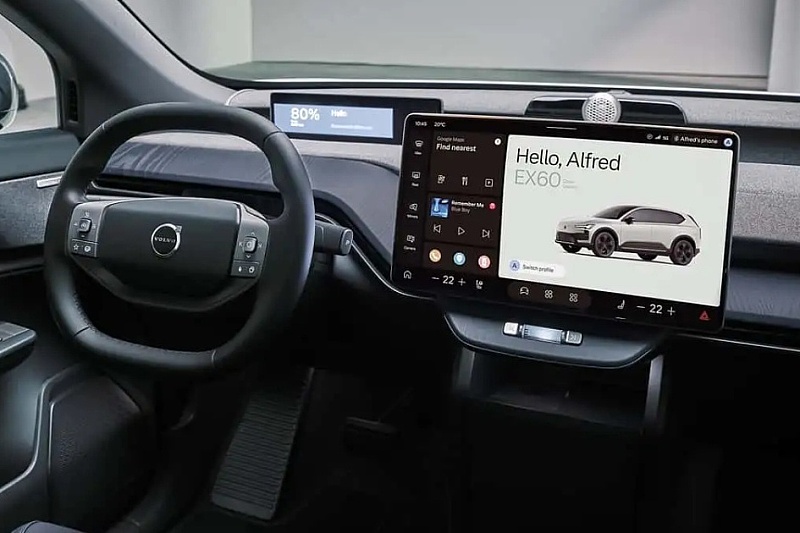
The collaboration between Volvo and Google, which began back in 2020, is entering a new phase. Instead of developing everything independently, the Swedish company is focusing on deep integration with one of the world's leaders in the digital ecosystem.
At the start of production of the new electric crossover EX60, the company's Chief Technology Officer, Anders Bell, revealed the strategy. Volvo is concentrating on the design and safety of the car itself, leaving the digital component to the professionals. This avoids the cumbersome nature of proprietary systems and ensures regular updates.
When Volvo announced the switch to Android Automotive in 2020, it seemed risky. Many thought that handing over control of the interface to a third party was a loss of brand identity. However, today it looks like a forward-thinking decision in the industry. Instead of wasting resources on fine-tuning maps or music players, Volvo's engineers are working on how the software interacts with the car's sensors.
Thanks to this partnership, Volvo has become a priority client for Google. New features appear in the Swedish brand's cars earlier than in competitors, and the software quality is higher because thousands of Google developers refine it, rather than a limited team from a single car brand. This is a model we've already seen in the smartphone world, and it is now fully functional in the automotive industry as well.
The next major step is the integration of advanced artificial intelligence, Gemini. This is not just another voice assistant that can only adjust the cabin temperature, as the multimedia system is now directly connected to the car's cameras and radars. Anders Bell notes that this allows the AI to "see" the same things as the driver, but to analyze faster and more accurately.
Drivers will be able to ask, "Is parking allowed here?" and the system will analyze traffic signs in real time.
They will also be able to ask, "Will this box fit in the trunk?" and the car will compare the dimensions of the object in front of the camera with the trunk's capacity.
The AI will also help calculate battery charging time and range more precisely, taking into account terrain and driving style.
The integration of Gemini and new Google services will not be limited to the EX60 model. Millions of already sold Volvo cars released in recent years will receive wireless updates. This fundamentally changes the approach to car ownership, as the car does not become outdated the day after it leaves the showroom; on the contrary, it gains new capabilities.
Despite the deep integration with Google, support for Apple CarPlay remains. Volvo understands that the user should choose how they want to interact with the device.