The US president stated that the ball is now in Iran's court. "If they want to talk, all they have to do is call!!!" Trump posted on social media. Negotiations were supposed to follow historic face-to-face talks earlier this month between the US delegation, led by Vice President JD Vance, and the Iranian delegation, headed by Parliament Speaker Mohammad Bagher Qalibaf. However, Iranian officials question how they can trust the US after American forces began a blockade of Iranian ports in response to Iran's control over the Strait of Hormuz. Iranian Foreign Minister Abbas Araghchi left the Pakistani capital on Saturday evening, two Pakistani officials told The Associated Press, speaking on condition of anonymity because they were not authorized to speak to the media. Araghchi then traveled to Oman, on the other side of the Strait of Hormuz, a country that has previously mediated peace negotiations. He said he would return to Pakistan on Sunday before heading to Russia, Iran's state news agency IRNA reported. "We presented Iran's position on a viable framework for a permanent end to the war against Iran. It remains to be seen whether the US is truly serious about diplomacy," Araghchi said on social media about his talks in Pakistan, which he described as a discussion of Iran's red lines for negotiations. Meanwhile, another ceasefire was shaken on Saturday—between Israel and the Iran-backed Lebanese militant group Hezbollah—after both sides exchanged fire, and Israeli Prime Minister Benjamin Netanyahu ordered the military to "strongly attack Hezbollah targets in Lebanon." Trump announced last week an indefinite extension of the ceasefire with Iran. Most fighting has stopped, but economic consequences are mounting two months into the war, as global shipments of oil, liquefied natural gas, fertilizer, and other goods are disrupted by the near-total closure of the Strait of Hormuz. Both sides continue to issue military threats. Iran's Joint Military Command warned on Saturday that "if the US continues aggressive military actions, including naval blockades, banditry, and piracy," there will be a "strong response." Even before Saturday's events, Iran's Foreign Ministry stated that any negotiations would be indirect, mediated by Pakistani officials. Trump later told reporters that within ten minutes of canceling his envoys' trip to Pakistan—Steve Witkoff and Jared Kushner—Iran sent a "much better" proposal. He did not provide details but emphasized that one of his conditions is that Iran "will not have nuclear weapons." Contentious issues in the negotiations include Iran's enriched uranium, the standoff over the Strait of Hormuz, as well as concerns about Iran's missile program and its support for armed proxy groups in the region. Tehran notes that indirect talks with the US last year and earlier this year about its nuclear program—a long-standing source of tension—ended with US and Israeli strikes on Iran, further heightening its caution. The price of Brent crude oil, the international benchmark, is now nearly 50% higher than at the start of the war due to Iran's control over the strait, through which a fifth of the world's oil passes in peacetime. Iran attacked three ships last week, while the US maintains a blockade of Iranian ports. Trump ordered the military to "shoot and kill" small boats suspected of potentially laying mines. On Saturday, for the first time since the war began with US and Israeli strikes on February 28, Iran resumed commercial flights from Tehran's international airport. According to state television, flights are planned to Istanbul, Oman's capital Muscat, and the Saudi city of Medina. Since the start of the war, at least 3,375 people have been killed in Iran and at least 2,496 in Lebanon, where fighting between Israel and Hezbollah resumed two days after the war broke out in Iran. In Israel, 23 people have been killed, and more than ten in Gulf Arab states. Fifteen Israeli soldiers have been killed in Lebanon, 13 US soldiers in the region, and six United Nations peacekeepers in southern Lebanon. Trump announced on Thursday that Israel and Lebanon agreed to extend the ceasefire between Israel and Hezbollah for an additional three weeks. Hezbollah is not participating in the Washington-mediated diplomacy. However, on Saturday, Israel carried out new strikes in southern Lebanon, killing at least six people it said were Hezbollah militants, while more rockets and drones were fired from Lebanon toward Israel.
Society
Negotiations fail in Pakistan: Trump's delegation didn't even show up, Iranian foreign minister leaves Islamabad
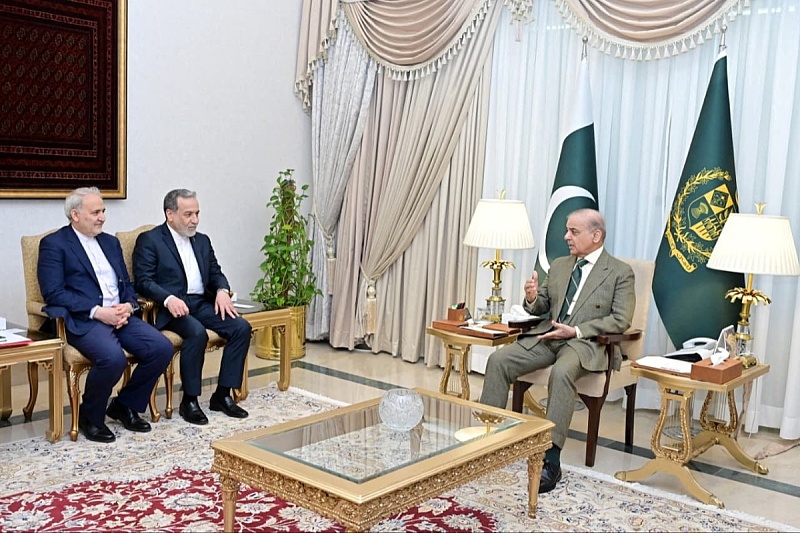
Attempts to hold ceasefire negotiations between the United States and Iran have failed after Iran's top diplomat left Pakistan, and President Donald Trump's envoys did not travel to Islamabad on his orders.
ingestion