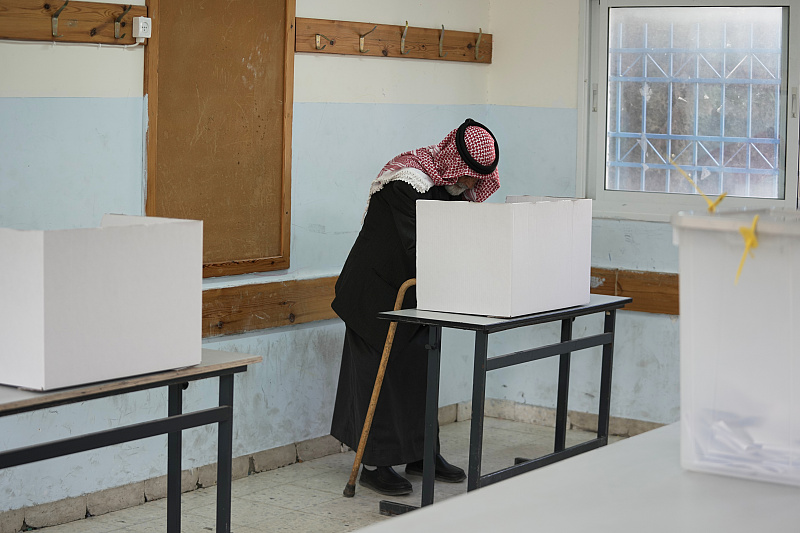
The Palestinian Authority, which governs semi-autonomous parts of the West Bank, described Saturday's vote in central Gaza's Deir al-Balah as a largely symbolic pilot project aimed at politically linking the Palestinian territories. These were the first elections in a part of Gaza under Hamas control in more than two decades.
Deir al-Balah, like much of the Gaza Strip, was heavily devastated during the two-year war but avoided an Israeli ground invasion. Voter turnout in the city was 23 percent, with officials citing mass displacement and outdated civil registries as major obstacles. Hamas did not field its own lists nor attempt to prevent the voting.
In the West Bank, turnout was 56 percent, or more than half a million people, which did not significantly deviate from previous elections in the area. Official results were expected later on Sunday. The elections in both territories pertained to local councils overseeing water supply, roads, and electricity.
Rami Hamdallah, president of the Central Elections Commission based in Ramallah and a former prime minister, told reporters: "Everyone is aware of the political, security, and economic circumstances, the fragmentation of the Palestinian territories, the war in Gaza, and the regional conflict with Iran."
"Just holding the elections in Deir al-Balah is a significant achievement, and we hope to organize elections in other bodies across the Gaza Strip in the near future."
The vote took place following electoral reforms implemented under international pressure, with the new system allowing for the election of individuals rather than party lists. Due to low trust in political parties, families and tribal communities played a greater role in the campaign.
The Palestinian Authority has not held presidential elections in 21 years. Mahmoud Abbas was elected in 2005 for a four-year term, and presidential and parliamentary elections have not been held since 2006. Prime Minister Mohammad Mustafa described Saturday's vote as "another step on the path to full independence," while Israel, led by Prime Minister Benjamin Netanyahu, opposes a Palestinian state.
Some Palestinians say local elections are not enough. Palestinian-American businessman Bashar Masri posted on social media: "Municipal elections are an important step, but they are not enough... We want general elections."