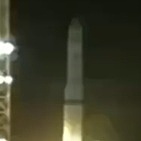
The Ministry of Foreign Affairs of Pakistan announced that the Space and Upper Atmosphere Research Commission (Suparco) successfully launched the domestically produced electro-optical satellite EO-3 from China's Taiyuan Launch Center. It stated that the new satellite marks another milestone in the development of national space capabilities.
In addition to its primary imaging mission, EO-3 carries experimental payloads to verify next-generation space technologies, including a multi-geometry imaging module for higher precision, an advanced energy storage system, and an artificial intelligence-based data processing unit for real-time analysis.
It added that the inclusion of EO-3 in Pakistan's fleet of Earth observation satellites will significantly strengthen national remote sensing capabilities, improve data continuity, imaging reliability, and analytical precision, and support various socio-economic sectors.
The military intelligence service ISPR stated that the satellite will provide data that will "revolutionize urban planning, disaster management, food security, and environmental protection."
President Asif Ali Zardari called the launch a historic milestone and emphasized that it is a clear manifestation of Pakistan's self-sufficiency, scientific expertise, and growing capabilities in space technology. Zardari praised the expertise of Suparco's scientists and engineers and expressed gratitude for China's "consistent and reliable cooperation" in this sector.
According to the Ministry of Foreign Affairs statement, Prime Minister Shehbaz Sharif congratulated Suparco's scientists and engineers, reaffirmed the government's strong commitment to the development of the space program, and thanked China for its continued support.
Deputy Prime Minister and Foreign Minister Ishaq Dar described the launch as a reflection of Pakistan's growing scientific capabilities and announced further strengthening of the country's presence in space.
Interior Minister Mohsin Naqvi described the launch as a great achievement for the nation and stated that the friendship between Pakistan and China is reaching new heights in space. China's Xinhua News Agency reported that the satellite was carried by a Long March-6 carrier rocket at 20:15 Beijing time and successfully entered its planned orbit.
The first domestically produced electro-optical satellite EO-1 was launched from China's Jiuquan Center in January 2025, while EO-2 successfully lifted off in February from China's Yangjiang Seashore Launch Center.