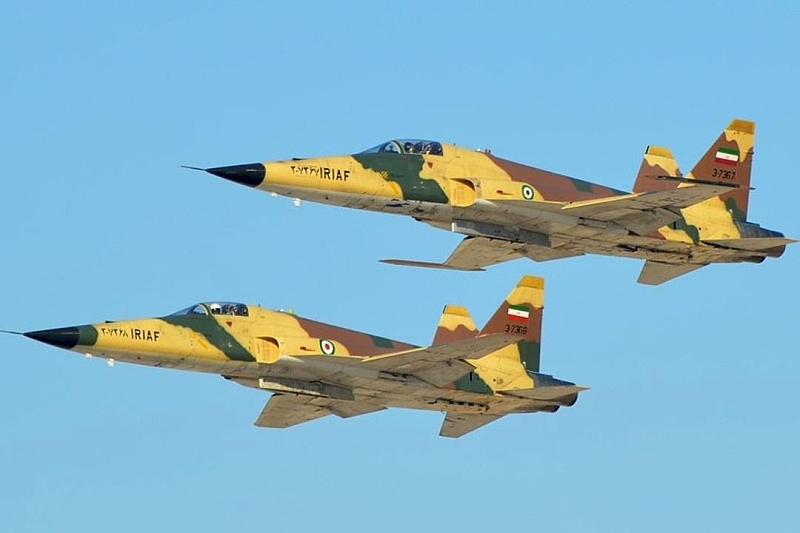
According to NBC, Iranian F-5 pilots managed to penetrate layers of air defense and drop bombs on the base. What gives this operation an incredible tone is that it was carried out with aircraft that are over 50 years old and technologically significantly inferior to the US air fleet, which includes F-16, F-18, F-35, and F-22 fighter jets. According to estimates, Iran has about thirty operational F-5 aircraft, remnants of the fleet acquired by the Shah's regime before the Islamic Revolution. A total of 181 F-5 aircraft arrived in Iran before the Islamic Revolution. Iran's F-5 aircraft were produced until 1976. Iran has also managed to develop its own variants of the F-5 through reverse engineering, named HESA Saeqeh and HESA Azarakhsh, but it is unknown how many of these aircraft are operational. The F-5 was developed by the American company Northrop in the late 1950s, made its first flight in 1959, and entered operational service in 1964. Production continued until 1987. That there were attempts by the Iranian air force to carry out attacks on bases is also shown by an earlier report that the Qatari air force shot down two Iranian Su-24 aircraft, just minutes before the aircraft managed to drop their payloads on their targets. The conservative think tank American Enterprise Institute (AEI) states that the damage to US bases and equipment in the Persian Gulf was significantly greater than the Pentagon publicly acknowledged, and that repair costs could reach billions of dollars. AEI estimates that Iran hit more than 100 targets within 11 bases in seven countries: Qatar, the United Arab Emirates, Bahrain, Jordan, Kuwait, Iraq, and Saudi Arabia. Analysts estimate that just rebuilding the infrastructure could cost more than five billion dollars.
Society
Reverse Top Gun: Iran used F-5 aircraft over 50 years old to bomb a US base in Kuwait.
According to a report by NBC News, Iran used several decades-old F-5 aircraft in its attack on the U.S. military's Camp Buehring in Kuwait. This attack provides evidence of far greater chaos in U.S. air defense than previously believed.
ingestion