Authorities in Kyiv warn that earlier Russian attacks have further increased risks around nuclear facilities. They claim that Moscow has more frequently targeted the Chernobyl zone, and last year, the protective shield covering the reactor was damaged. Particular concern was raised by a drone attack in February 2025, which damaged the large protective arch above the reactor. Although no radiation leak occurred, experts warn that urgent and costly repairs are needed to prevent long-term consequences.
The anniversary commemoration comes at a time when the security of Ukraine's energy system is seriously threatened due to constant attacks. Foreign officials, including representatives of the European Union, have arrived in Kyiv to pay tribute to the victims.
Ukrainian President Volodymyr Zelensky announced that, together with IAEA Director General Rafael Grossi, he participated in the opening of a new permanent exhibition at the National Museum "Chernobyl": "Chernobyl: People and Meanings." "It is important to remind ourselves of the damage Russia caused during the occupation of the Chernobyl nuclear power plant and the threat that Russian shelling poses to global nuclear security," Zelensky stated.
Commemorations were held at the monument to fallen emergency service workers in Kyiv, as well as in Slavutych, a city built for workers evacuated after the 1986 disaster. Ukrainian officials recalled that Chernobyl is a symbol of the Soviet system's irresponsibility, but also of the heroism of thousands of people who participated in mitigating the consequences of the accident.
According to Ukrainian data, since mid-2024, dozens of Russian drones have been recorded flying in the immediate vicinity of the plant. The 1986 disaster left long-lasting consequences. Millions of people were exposed to radiation, hundreds of thousands were displaced, and large areas of land remained contaminated. Thousands later died from radiation-related diseases, although the exact number of victims remains disputed.
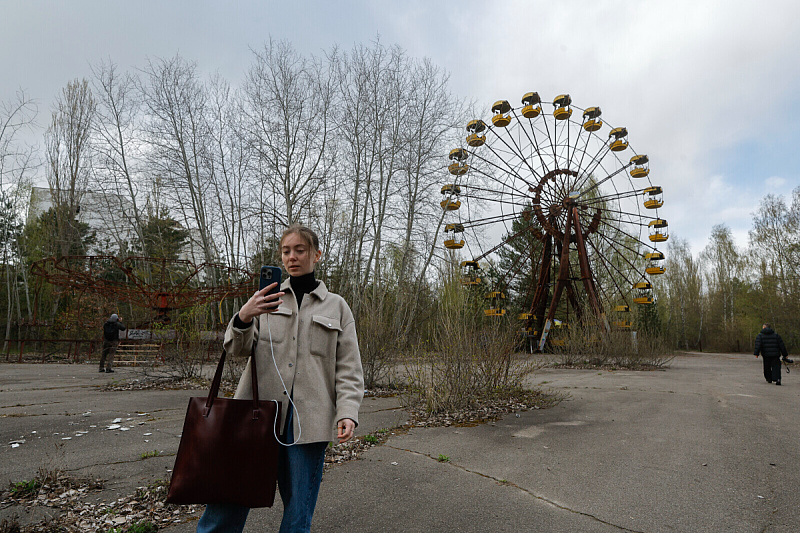
World leaders stated today that the Chernobyl tragedy must remain a permanent warning. They emphasized that nuclear energy must be used responsibly, in the service of life and peace. Today, four decades after the accident, the area around the plant remains an exclusion zone. Although nature has partially reclaimed the space, the presence of the military and constant monitoring remind us that the danger has not yet fully passed.