The fall of Milošević began at the end of 2000. After the elections held in late September, it was announced that no candidate had won more than 50 percent of the votes, leading to a runoff. This sparked outrage among the opposition, led by presidential candidate Vojislav Koštunica, who believed the elections were stolen.
Following several days of protests, the government fell on October 5 when more than 100,000 people took to the streets of Belgrade, after which Milošević conceded defeat and withdrew from politics.
With the arrival of a new government in Serbia, led by Prime Minister Zoran Đinđić, the arrest of Milošević began. The operation started on March 30, 2001.
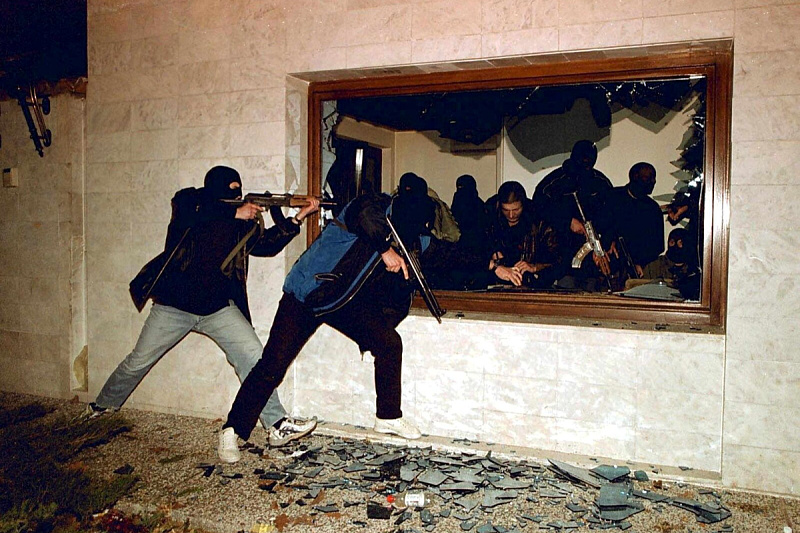
The situation escalated on the night of March 30-31 when the Special Operations Unit, led by Milorad Ulemek Legija, forcibly entered the villa and clashed with Milošević's private security.
After that operation failed because Milošević refused to surrender without the use of weapons, the government moved to Plan B. This involved negotiations for a peaceful surrender, led on behalf of the Serbian government by Čedomir Jovanović, then an associate of Zoran Đinđić and a young man who gained fame through student protests in the late 1990s.
It was one of the biggest confrontations between the old regime and the new democratic government. Jovanović was the only government representative to enter the Villa Mir and speak with Milošević. For two days, he persuaded him to surrender to avoid police having to forcibly enter the villa, which would endanger both his life and the lives of everyone inside.
One of the main arguments of Jovanović and the then-government was that Milošević was not being sought at the request of the International Criminal Tribunal for the former Yugoslavia in The Hague, but rather on suspicion of committing a crime under Yugoslav law.
Nevertheless, Milošević kept telling Jovanović that he was "not a fool" and was aware that he would be extradited. Because of this, at one point he demanded guarantees from the then-government that he would not be extradited to any judicial or other institution outside the country. He also wanted guarantees that he would end up in the Central Prison in Belgrade and that his family could visit him every day.
Shortly after, Jovanović returned with a paper containing those guarantees. Lawyers assured Milošević that this guarantee was "only for tonight," to which he told Jovanović, "In the end, you will extradite me."
His final condition was that Milorad Ulemek Legija organize the transport to the Central Prison. In the end, the police agreed to this condition, with Jovanović in the vehicle leading the convoy, and Legija did not even drive the vehicle in which Milošević was riding.
Legija was caught between two fires at the time, as both sides threatened him with criminal prosecution for things he and his unit had done earlier. Milošević also told him that he and his men would end up in The Hague if he "fell."
In the end, it all ended with a peaceful surrender under guarantees, and Milošević ended up in the Central Prison.
The guarantees, as Milošević had assumed, meant nothing, and Đinđić extradited him to The Hague in the summer of 2001, on Vidovdan. Five years later, in March 2006, Milošević was found dead in his detention unit. The trial was never completed.