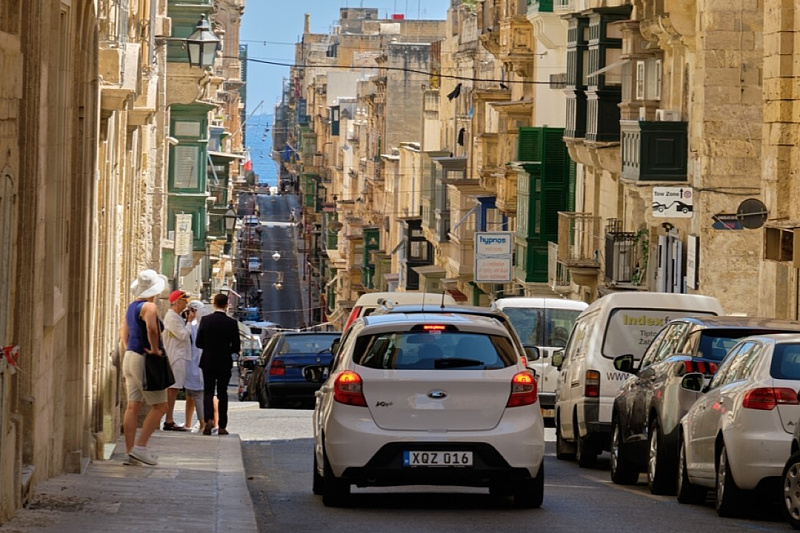
In Malta, the price of a liter of gasoline is exactly 1.34 euros, and a liter of diesel is 1.21 euros, and both figures apply wherever you fill up in the country, at any gas station. Moreover, these fixed prices have not changed since 2020, meaning over the past five years and 10 months.
Malta long had centrally regulated prices, with decisions on changes made more frequently. But since 2020, amid the pandemic, authorities decided to fix them at a lower level and keep them unchanged for a longer period. A wave of inflation followed in 2021, and the authorities left the prices the same. Then, in 2022, when a new energy crisis hit Europe, with prices rapidly rising to record levels, Malta again maintained the agreed-upon prices.
Two weeks ago, there were very intense discussions in Malta about the need to revise prices in the context of rising prices on international exchanges, but the government guaranteed that the price would remain unchanged. The fixed-price policy is a national strategy that has boosted GDP growth and kept inflation under control.
How is this possible? The government controls the fuel import process through a state-owned company, allowing other private companies to do the same, but under similar regulatory conditions. The policy so far has been to track periods of favorable market prices and import large quantities of petroleum derivatives in advance to guarantee ample reserves. During periods of price spikes, fuel purchases were avoided, waiting for more favorable times.
The government adjusts the tax rate so that the price at the pump remains fixed. Oil operators are allowed to calculate their additional costs relative to the purchase price of oil and a regulated profit margin, and the difference remaining to the final price is a variable tax component. Essentially, it is the state that collects more or fewer levies on fuel depending on the market situation and how well it chooses the moments to buy the quantities of petroleum derivatives that operators will import into the country.
Equally surprising is the fact that since 2014, Malta has had a fixed price not only for fuel but also for electricity. The price for consumers who use very little is 0.1047 euros/kWh, for those with average consumption—thus, the majority of the country's residents—it is 0.1298 euros/kWh, and for large consumers, it is 0.1607 euros/kWh. Some consumers may have a combination of these tariffs, with a lower price for the first kWh and a higher tariff afterward, but the price range has been the same for thirteen consecutive years.