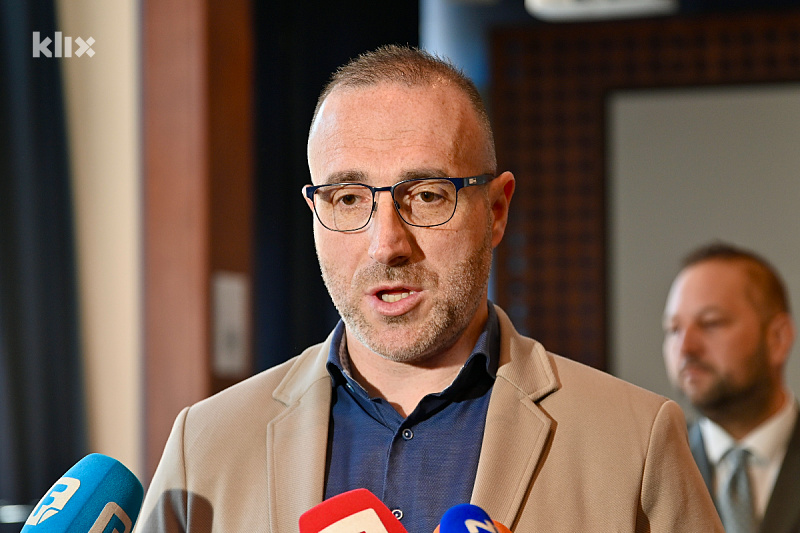
Šerak points out that the water supply network is currently in a phase of gradual modernization, aimed at improving the quality and reliability of water supply, as it is over 50 years old.
"In the upcoming period, significant works are planned as part of the third tranche of financing from the EBRD, with a total value of five million euros, which includes a complete reconstruction of the water supply network. During the implementation of these activities, temporary interruptions in water supply are possible; however, the responsible services are making maximum efforts to minimize the number of consumers who will be without water supply during that period," says Šerak.
He adds that all planned interruptions are announced in a timely manner via the ViK website and Facebook page, as well as through the media, to allow citizens to prepare adequately.
"These works represent an important step toward a long-term sustainable, efficient, and secure water supply system," he explains.
We asked Šerak when all key repairs will be finally completed, so that daily announcements of reductions on certain streets due to works will no longer be necessary.
"It is important to emphasize that the total length of the transport and distribution network is 1,193 kilometers, plus more than 227 kilometers of connection pipes for over 77,000 connections, which clearly indicates the complexity and scope of the system being managed. The network is being renewed in a planned and continuous manner, with an average annual investment that allows for the reconstruction of about three percent of the total infrastructure. Given the high financial amounts required for such projects, it is not realistic to expect a complete replacement of the entire network in a short period," emphasizes Šerak.
Nevertheless, continuous investments and project implementation aim to gradually reduce breakdowns and reductions, and improve the stability of water supply.
In this context, Šerak explains, improvements are already visible, and a significant reduction in such situations is expected in the long term.
When asked about water losses due to faulty pipes, he responds that according to available measurements, water losses in the system currently range between 70 and 71 percent.
"To mitigate this problem, continuous investments are being made in the modernization and reconstruction of infrastructure, along with daily activities to repair breakdowns and fix damaged pipes. Additionally, through planned investments in measuring devices in the upcoming period, including the replacement of flow meters and water meters, more precise data on actual water losses will be ensured. These measures aim to gradually reduce losses, increase system efficiency, and improve the quality of water supply," Šerak tells us.
One of the topics that most interests citizens certainly concerns the price of water, and Šerak says that at this moment, no decision has been made to increase prices, so citizens have no reason to worry.
We also discussed the formation of water prices in the Sarajevo Canton.
"The prices of utility services, including water supply, are determined through a professional analysis conducted by an independent expert body engaged by the Government of the Sarajevo Canton. Based on their proposals and assessments, the final decision on any change in prices is made by the Government of the Sarajevo Canton," explains Šerak.
At the end of the conversation, Šerak answered us about the quality of drinking water and in which parts of Sarajevo the water quality is poorer.
"The quality of drinking water in Sarajevo is regularly monitored through daily checks. More than 30 samples are taken daily from various locations across the city, which are analyzed in the laboratory in accordance with prescribed standards. According to the results of these analyses, all tested samples comply with current norms and are health-safe, meaning they meet the conditions for use and drinking," concludes Šerak.